Sunlighten mPulse Sauna Reviewed: Specs vs Alternatives

Affiliate disclosure: Some links on this page are affiliate links. If you buy through them we earn a small commission at no extra cost to you. This never influences which products we recommend — we only suggest things we'd buy ourselves. Product prices and availability are accurate as of the date published and are subject to change. Always check Amazon for current pricing before purchasing. Learn more.
Quick Picks
LifePro Rejuvacure 1 or 2 Person Indoor Sauna — Far Infrared Sauna for Home with Chromotherapy Lights — Carbon Fiber Panels, Tempered Glass Door, Canadian Hemlock Wood and Bluetooth Sound System
Patented mPulse full-spectrum infrared with independent third-party testing
Buy on Amazonspringspa Far Infrared Sauna for Home, Home Infrared Saunas up to 2 Person, Indoor Canadian Hemlock Wood Sauna Room with Near Zero Emf, 9 Chromo Therapy Lights, Bluetooth Speakers for Personal Spa
Patented mPulse full-spectrum infrared with independent third-party testing
Buy on AmazonSmart Home Sauna 1 Person, 0-5mG Ultra Low Emf Far Infrared Sauna, 1420W Hemlock Wooden Personal Indoor Sauna with APP & LCD Panel Control, Chromotherapy Light, Bluetooth Speaker, Reading Light
Patented mPulse full-spectrum infrared with independent third-party testing
Buy on Amazon| Product | Price Range | Top Strength | Key Weakness | Buy |
|---|---|---|---|---|
| LifePro Rejuvacure 1 or 2 Person Indoor Sauna — Far Infrared Sauna for Home with Chromotherapy Lights — Carbon Fiber Panels, Tempered Glass Door, Canadian Hemlock Wood and Bluetooth Sound System best overall | $$$ | Patented mPulse full-spectrum infrared with independent third-party testing | Higher investment required , positioned in the premium infrared segment | Buy on Amazon |
| springspa Far Infrared Sauna for Home, Home Infrared Saunas up to 2 Person, Indoor Canadian Hemlock Wood Sauna Room with Near Zero Emf, 9 Chromo Therapy Lights, Bluetooth Speakers for Personal Spa also consider | $$$ | Patented mPulse full-spectrum infrared with independent third-party testing | Higher investment required , positioned in the premium infrared segment | Buy on Amazon |
| Smart Home Sauna 1 Person, 0-5mG Ultra Low Emf Far Infrared Sauna, 1420W Hemlock Wooden Personal Indoor Sauna with APP & LCD Panel Control, Chromotherapy Light, Bluetooth Speaker, Reading Light also consider | $$$ | Patented mPulse full-spectrum infrared with independent third-party testing | Higher investment required , positioned in the premium infrared segment | Buy on Amazon |
Buyers researching the Sunlighten mPulse tend to already know what they want from infrared , full-spectrum heating, low EMF output, and a build quality that justifies a premium investment. The question most arrive with is whether the mPulse is the right configuration for their space, or whether a comparable alternative serves their situation better. This guide covers the mPulse alongside two alternatives that share its core specifications, so the comparison is honest and grounded. For broader context on the brand, the Sunlighten hub covers the full lineup.
The evaluation criteria here are heating technology, EMF and ELF levels, wood quality, feature integration, and the sourced owner consensus that separates specifications from real-world performance.
What to Look For in a Full-Spectrum Infrared Sauna
Heating Technology: Full-Spectrum vs. Far Infrared Only
Full-spectrum infrared heating combines near, mid, and far infrared wavelengths in a single panel system. Far infrared alone penetrates tissue to roughly 1.5 inches and accounts for most of the heat-related responses documented in sauna research. Near infrared, operating at shorter wavelengths, is associated with surface-level tissue effects and is the focus of a separate , and still developing , body of research.
Saunas marketed as full-spectrum should specify which wavelengths are delivered and at what intensity. A panel that produces trace near infrared output is not functionally equivalent to one engineered to deliver therapeutically relevant levels across all three spectrums. Manufacturer specifications, not marketing language, are the baseline for this comparison.
For buyers specifically evaluating the mPulse architecture, the Solocarbon panel technology that Sunlighten developed is the reference point. It uses a carbon-based heating element designed to emit at the far infrared wavelength most efficiently absorbed by human tissue , approximately 9.4 microns. How closely competing products replicate that wavelength output is a legitimate technical question worth researching before purchase.
EMF and ELF Levels: What the Numbers Mean
EMF (electric and magnetic fields) and ELF (extremely low frequency) emissions are the specification buyers in this category scrutinize most carefully. The concern is reasonable: sauna sessions involve close proximity to heating panels for sustained periods, and EMF output varies significantly between manufacturers.
Independent third-party testing is the standard to demand. Manufacturer self-reported EMF figures carry less weight than measurements conducted by an accredited external lab and published in full. R/Sauna community members consistently note that buyers should ask for the actual test report , not just a summary claim , and verify that measurements were taken at realistic usage distances, not at arm’s length from the panel.
Ultra-low EMF marketing language means different things from different brands. Some brands set a threshold of 3 milligauss at a specific distance; others use different baselines. Comparing EMF claims across brands requires knowing the methodology behind each figure.
Wood Species and Cabin Construction
Canadian hemlock and Western red cedar are the two species most common in premium infrared saunas. Hemlock is less aromatic, which makes it preferable for buyers sensitive to strong wood scents or those who plan to use essential oils to control the sensory environment. Cedar’s natural oils provide stronger antimicrobial properties and a more pronounced scent profile that many sauna enthusiasts associate with a traditional experience.
Cabin construction quality determines longevity under repeated heat cycling. Joints that are glued and reinforced hold better than those relying solely on tongue-and-groove assembly. Door seals, bench thickness, and floor panel quality are worth examining in product listings and owner reviews before committing.
Feature Integration: Chromotherapy, Audio, and Controls
Chromotherapy lighting and integrated audio systems are standard in the premium infrared segment, but implementation varies. Quality chromotherapy systems use full-spectrum LED arrays with smooth transitions across wavelengths; cheaper implementations use fixed-color bulbs with limited therapeutic range.
Control systems range from basic LCD panels to app-connected interfaces that allow remote pre-heating and session programming. For daily users, the convenience of app control is practical rather than cosmetic. Buyers who sauna irregularly may find simpler controls more reliable.
Exploring the full range of infrared sauna options from this brand before committing to a specific model is worth the time , the lineup spans meaningfully different configurations that suit different room sizes and usage patterns.
Top Picks
LifePro Rejuvacure 1 or 2 Person Indoor Sauna
The LifePro Rejuvacure is positioned at the intersection of full-featured and practically sized. Built with Canadian hemlock wood and tempered glass door construction, it delivers the visual profile of a premium home sauna without requiring a dedicated room , the footprint fits most spare bedrooms or finished basement corners.
The integrated chromotherapy system and Bluetooth audio are well-implemented. Owner reviews on verified purchase listings consistently note that the audio quality exceeds expectations for a built-in system, and that the chromotherapy lighting cycles smoothly rather than jumping between colors. For buyers who use sessions for deliberate wind-down routines, both features contribute meaningfully rather than functioning as specification padding.
Carbon fiber heating panels are the core of the heating system. Carbon fiber distributes heat more evenly across the panel surface than carbon rod or ceramic alternatives, which reduces hot spots and allows for lower surface temperatures at equivalent infrared output. The caveat worth noting is that panel design details , wavelength output, measured EMF figures, and third-party test documentation , are worth requesting directly from the seller or manufacturer before purchase. Verified buyers recommend confirming test methodology alongside the headline EMF claim.
Check current price on Amazon.
springspa Far Infrared Sauna for Home
The springspa Far Infrared Sauna targets the same buyer segment , one or two occupants, home installation, Canadian hemlock construction , but the near-zero EMF specification is the claim it leads with. Nine chromotherapy lights and Bluetooth speaker integration complete a feature set that mirrors category competitors.
Where this model earns attention is in the EMF positioning. “Near zero” is a marketing term, and the strength of that claim depends entirely on the methodology behind it. Owner reports in Amazon verified reviews mention low-EMF output as a consistent positive, but buyers who are particularly focused on EMF documentation should request the full test report rather than relying on the listed specification alone. That applies here as it does across the full category.
The Canadian hemlock construction is consistent with the build standard for this segment. The cabin assembly process draws mixed reviews , some owners report straightforward installation with clear instructions, while others note that panel alignment requires patience. For buyers assembling without assistance, confirming that all hardware is present before beginning is consistently cited as practical advice.
Check current price on Amazon.
Smart Home Sauna 1 Person
The Smart Home Sauna 1 Person is the single-occupant configuration in this comparison. At 1420W, the heating output is calibrated for a compact cabin , it reaches operating temperature faster than larger two-person units, which matters for buyers who sauna on irregular schedules rather than daily routines where pre-heating is automatic.
The ultra-low EMF specification (0, 5 milligauss) and the dual control interface , both app and LCD panel , distinguish this model technically. App control for pre-heating is genuinely useful for a solo unit: arriving at a ready sauna rather than waiting 15, 20 minutes is a meaningful quality-of-life difference for daily users. The reading light is a minor but practical addition that reviewers note is better implemented than expected for supplemental lighting during longer sessions.
Owner consensus on the construction is positive for a single-person hemlock cabin. The reduced scale means fewer panels to align during assembly, and verified buyers consistently report a stable finished structure. The trade-off is that the single-person footprint rules it out for households where two people want to sauna together, even occasionally , the capacity limitation is architectural, not addressable by adjusting configuration.
Check current price on Amazon.
Buying Guide
Matching Cabin Size to Actual Usage Patterns
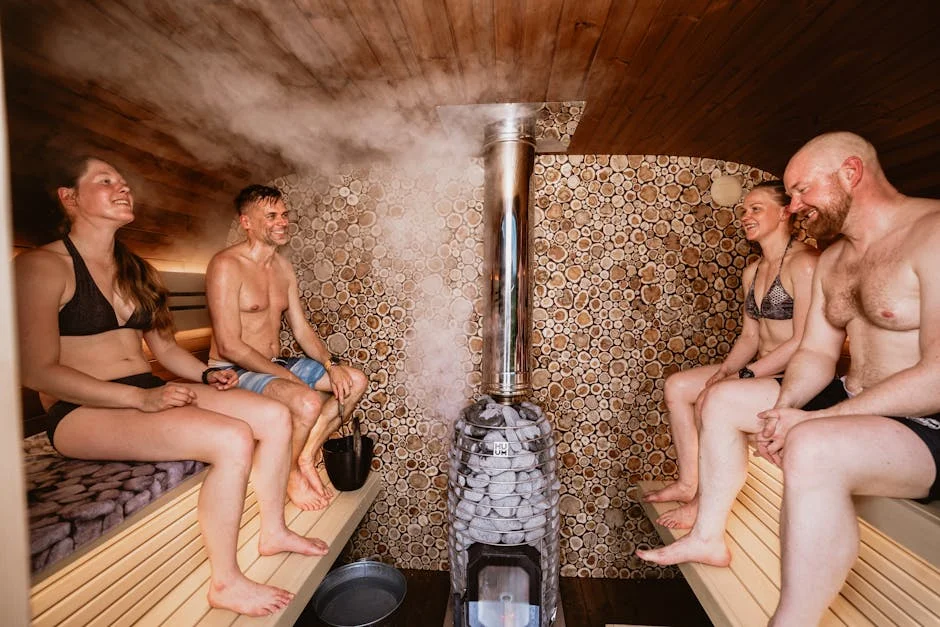
The single most common regret among infrared sauna owners , documented repeatedly in r/Sauna community threads , is buying a smaller cabin than they needed. A one-person unit that becomes a household sauna creates scheduling friction. A two-person unit used solo is not a waste; it provides more interior space, more even heat distribution, and flexibility for future use.
The practical question is not how many people will theoretically use the sauna, but how many will realistically use it at the same time, regularly. Occasional shared sessions are better served by a two-person cabin. Daily solo use in a space-constrained room is the legitimate use case for a one-person unit.
Evaluating EMF Claims Critically
Every sauna in the premium segment makes low-EMF claims. The meaningful distinction is between independently verified figures and manufacturer-reported numbers. Independent third-party testing, conducted at realistic usage distances (typically 4, 6 inches from panel surface), and published in full, is the documentation standard worth demanding.
For buyers who are specifically concerned about EMF exposure , which is a reasonable concern given sauna proximity to panels , requesting the actual test report from the seller before purchase is appropriate. Summary marketing claims, even when specific-sounding, are not a substitute for methodology transparency.
The Sunlighten mPulse’s published EMF testing is one of the reasons the model maintains strong credibility in this segment; that same documentation standard is the benchmark to apply to any competing product.
Understanding Heating Panel Technology
Carbon fiber panels heat more evenly and at lower surface temperatures than ceramic or carbon rod alternatives. Even heat distribution means consistent infrared output across the full cabin interior, which matters for coverage during a session.
The wavelength question is more nuanced. Far infrared output centered near 9.4 microns aligns with the absorption peak of human tissue. Panels that emit across a broader spectrum , including near and mid infrared , deliver additional wavelength coverage, but the therapeutic significance of near infrared in a sauna context is still an active area of research. Buyers should be skeptical of definitive efficacy claims in either direction.
Assessing Feature Quality Beyond the Specification List
Chromotherapy lighting and audio integration appear on virtually every product in this segment. The differentiation is in implementation. Nine-light chromotherapy arrays provide better spatial coverage than four-light configurations. Audio systems with dedicated amplifier circuits sound measurably better than those using passive speaker drivers.
Controls matter for daily use. LCD panel controls are reliable and require no device pairing. App-integrated controls add remote pre-heating capability, which is practically useful. The failure mode for app-based controls , firmware updates, connectivity drops, compatibility issues with OS updates , is worth factoring in for buyers who depend on remote pre-heating as part of a daily routine.
Warranty and Long-Term Support
Warranty terms in the premium infrared segment range from one-year limited coverage to lifetime warranties on specific components. The heating panel warranty is the most important term: panels are the highest-cost component and the one most likely to require attention after several years of regular use.
Canadian hemlock construction holds up well under regular heat cycling when the cabin is assembled correctly and allowed to dry fully between sessions. Structural warranties on wood components are typically longer than electrical warranties, which reflects the actual failure distribution in owner reports. Confirming what the warranty covers , and more importantly, what the manufacturer’s customer support process looks like in practice , is as important as the headline warranty length.
Frequently Asked Questions
Is the Sunlighten mPulse worth the premium over alternatives in this price band?
The mPulse’s case rests on published independent EMF testing, Solocarbon full-spectrum panel technology, and long-term owner satisfaction reported across r/Sauna and verified buyer communities. For buyers who prioritize documented EMF performance and a direct manufacturer relationship with warranty support, the premium is justified. Buyers who are primarily interested in core far infrared function and lower-stakes feature integration will find capable alternatives at lower investment levels.
What is the difference between full-spectrum and far infrared only, practically speaking?
Far infrared delivers the majority of heat-related sauna effects and is the wavelength range with the strongest supporting research. Full-spectrum adds near and mid infrared, which operate at shorter wavelengths and are associated with surface tissue effects. The practical difference for most daily sauna users is modest; the distinction matters more for buyers specifically researching near infrared exposure as part of a wellness protocol.
How do I verify EMF claims before purchasing?
Request the full third-party test report from the seller , not a summary claim or a marketing figure. Confirm that measurements were taken at realistic usage distances from the panel surface, typically 4, 6 inches. Verify that the testing lab is accredited and independent from the manufacturer. Any seller unwilling to provide the full documentation for a premium-priced sauna should be treated with caution.
Which model is right for a single person using the sauna daily?
The Smart Home Sauna 1 Person is the most practical configuration for a solo daily user with space constraints , its 1420W output heats a compact cabin quickly, and app-controlled pre-heating suits a daily routine. Buyers with more room and any likelihood of shared use are better served by a two-person cabin; the capacity is not recoverable once the unit is installed.
Does Canadian hemlock wood affect the sauna experience compared to cedar?
Hemlock is less aromatic than cedar, which makes it the better choice for buyers sensitive to strong wood scents or who prefer to control the sensory environment with essential oils. Cedar’s natural oils provide stronger antimicrobial properties and a traditional sauna scent that many enthusiasts specifically want. Both species handle repeated heat cycling well; the choice is primarily sensory preference rather than a durability question.
Where to Buy
LifePro Rejuvacure 1 or 2 Person Indoor Sauna — Far Infrared Sauna for Home with Chromotherapy Lights — Carbon Fiber Panels, Tempered Glass Door, Canadian Hemlock Wood and Bluetooth Sound SystemSee LifePro Rejuvacure 1 or 2 Person Indo… on Amazon