Sauna Wood Furnace Buyer's Guide: Compare Types & Features

Affiliate disclosure: Some links on this page are affiliate links. If you buy through them we earn a small commission at no extra cost to you. This never influences which products we recommend — we only suggest things we'd buy ourselves. Product prices and availability are accurate as of the date published and are subject to change. Always check Amazon for current pricing before purchasing. Learn more.
Quick Picks
Generic 16 Inch Long Aromatic Cedar Wood Boards. Rustic Wood for Crafts…
Quality construction suited to regular home sauna use
Buy on AmazonOutdoor Sauna 2 Person 1800W/110V Low EMF Dry Sauna Infrared Sauna for Home Inner Board Hemlock Wood/Outer Board Red Cedar, 8 Heating Panels with LCD Control Panel/Speaker and Tempered Glass Door
Quality construction suited to regular home sauna use
Buy on AmazonNorthwood Sauna - Sauna Backrest - Handmade from Canadian Red Cedar Wood - Ergonomic S-Shape Back Support & Non-Slip Pads
Quality construction suited to regular home sauna use
Buy on Amazon| Product | Price Range | Top Strength | Key Weakness | Buy |
|---|---|---|---|---|
| Generic 16 Inch Long Aromatic Cedar Wood Boards. Rustic Wood for Crafts… best overall | $$ | Quality construction suited to regular home sauna use | Confirm specifications match your specific installation space and electrical requirements | Buy on Amazon |
| Outdoor Sauna 2 Person 1800W/110V Low EMF Dry Sauna Infrared Sauna for Home Inner Board Hemlock Wood/Outer Board Red Cedar, 8 Heating Panels with LCD Control Panel/Speaker and Tempered Glass Door also consider | $$ | Quality construction suited to regular home sauna use | Confirm specifications match your specific installation space and electrical requirements | Buy on Amazon |
| Northwood Sauna - Sauna Backrest - Handmade from Canadian Red Cedar Wood - Ergonomic S-Shape Back Support & Non-Slip Pads also consider | $$ | Quality construction suited to regular home sauna use | Confirm specifications match your specific installation space and electrical requirements | Buy on Amazon |
| Art3d 4-Pack Acoustic Wood Slat Wall Panels for Interior Decor, 3D Fluted Sound Absorbing Wood Paneling for Accent Wall Ceiling Kitchen Living Room Bedroom Office, 94.5 x 7.9 inch Warm Teak also consider | $$ | Quality construction suited to regular home sauna use | Confirm specifications match your specific installation space and electrical requirements | Buy on Amazon |
| WVH Slatpanel Oak Natural Core – Acoustic 3D Textured Wood Panels for Walls & Ceilings | Decorative Panels for Homes, Offices & Studios | 2 x 47.24” x 12.6” | Real Wood Veneer, MDF, Felt also consider | $$ | Quality construction suited to regular home sauna use | Confirm specifications match your specific installation space and electrical requirements | Buy on Amazon |
Finding the right sauna wood furnace means sorting through combustion designs, wood species compatibility, and installation requirements that vary more than most buyers expect. The category spans small wall-mounted units to freestanding cast iron fireboxes , and the right fit depends on your enclosure size, draft conditions, and how often you plan to fire. A look at the full range of Wood & Materials options is worth doing before you commit to any single configuration.
What separates a capable sauna wood furnace setup from a frustrating one comes down to heat retention, airflow design, and the quality of the surrounding materials. The products below were selected for how well they support that system , from the heater itself to the wood components that define the sauna environment.
What to Look For in a Sauna Wood Furnace
Combustion Chamber Size and Heat Output
The combustion chamber determines how much wood you can load at once and how long the fire burns between stokes. Undersized chambers require constant attention. Oversized ones overheat a small enclosure quickly, forcing you to manage airflow aggressively. For a typical home sauna of 150 to 200 cubic feet, a firebox rated for that volume provides steady, manageable heat rather than temperature spikes.
Cast iron and steel both work well, but they behave differently. Cast iron holds heat longer after the fire dies down, extending your session without additional wood. Steel heats faster but cools faster too. The choice depends on whether you prioritize quick warm-up or extended heat retention after the fire is reduced.
Draft and Flue Design
Poor draft is the most common complaint among first-time wood-burning sauna owners. A flue that is too short, incorrectly angled, or undersized for the firebox produces back-drafting smoke, incomplete combustion, and uneven heating. The flue diameter must match the firebox manufacturer’s specification , typically four to six inches , and the vertical rise should provide enough draw for clean ignition.
Where you locate the stove within the enclosure affects draft too. Corner placement generally concentrates radiant heat, while center-wall placement distributes it more evenly. Neither is universally correct; the sauna’s layout and bench configuration should drive that decision.
Wood Species and Interior Material Compatibility
The wood you use inside the sauna , benches, wall paneling, backrests , must tolerate repeated heat cycling without warping, splintering, or off-gassing. Cedar, hemlock, and aspen are the standard species because they stay dimensionally stable and do not absorb excessive heat at bench contact points.
Denser hardwoods and MDF-core panels are not appropriate for the hot room. They retain surface heat to the point of discomfort and can off-gas resins or adhesives under sustained high temperatures. Understanding which materials belong inside the enclosure is foundational , the Wood & Materials selection on this site covers species comparisons in detail.
Surface Treatment and Finishing Requirements
Raw softwoods used in sauna interiors are generally left unfinished or treated with sauna-specific oils. Standard wood stains, polyurethane coatings, and most varnishes are not appropriate , they seal the wood’s surface in a way that traps heat and creates an uncomfortable, often chemically unpleasant environment under high temperatures.
Sauna-grade oil treatments , typically food-safe or formulated specifically for high-heat environments , protect the wood from moisture cycling without sealing the surface. Cedar and similar aromatic species have natural oils that reduce the need for additional treatment, though bench and backrest surfaces benefit from periodic re-oiling to prevent drying and cracking.
Safety Clearances and Load-Bearing Considerations
Wood-burning sauna stoves require specific clearance distances from combustible walls and benches. These are not flexible recommendations , they are the margin between safe operation and a fire hazard. Most manufacturers specify minimum clearances in their installation documentation; local building codes may add requirements on top of those.
Floor protection is equally important. The firebox must sit on a non-combustible surface , typically stone, tile, or a purpose-made heat shield. If you are retrofitting a wood-burning unit into an existing enclosure designed for an electric heater, the structural and clearance differences require a full re-evaluation before proceeding.
Top Picks
16 Inch Long Aromatic Cedar Wood Boards
16 Inch Long Aromatic Cedar Wood Boards address one of the most practical needs in sauna construction and maintenance: dimensional softwood stock in a species that genuinely performs in high-heat environments. Aromatic cedar’s natural oils give it strong resistance to moisture absorption, which matters in a sauna where temperature and humidity cycling happen every session.
These boards suit interior finishing work , wall cladding, bench framing, accessory shelving , where the material needs to stay stable without treatment. Owner reviews note the consistent milling and low void rate, which reduces waste in projects where each board is cut to fit specific dimensions.
Splintering risk is low with aromatic cedar compared to hemlock or spruce, which is a meaningful difference for benches and backrests in direct skin contact. The natural grain remains tight across heat cycling, and the aromatic quality that gives this species its name is a genuine asset in a sauna environment rather than just a marketing note.
Check current price on Amazon.
Outdoor Sauna 2 Person 1800W/110V Low EMF Dry Sauna
The Outdoor Sauna 2 Person 1800W/110V Low EMF Dry Sauna takes a different approach from individual components , it is a complete two-person infrared unit built for outdoor placement. The material combination here is worth noting: hemlock interior boards with red cedar exterior cladding. Hemlock is a standard sauna interior species for good reasons , it heats evenly, stays smooth under repeated use, and does not develop the resinous surface issues that some pine varieties produce.
Eight heating panels distributed across the enclosure provide coverage that point-source electric heaters often miss. The LCD control panel and built-in speaker address the practical convenience side of regular home use. At 110V, this unit runs on a standard circuit without a dedicated electrical installation , relevant to buyers who want outdoor placement without a significant electrical project.
The tempered glass door is a structural plus in an outdoor unit. Standard glass is not rated for the thermal stress a sauna door endures, and tempered glass also holds up better against the temperature differential between the heated interior and cold outdoor air. Buyers in northern climates report the cedar exterior aging well over multiple seasons without significant weathering damage.
Check current price on Amazon.
Northwood Sauna Sauna Backrest Handmade from Canadian Red Cedar Wood
The backrest is the most body-contacted surface in a sauna, which makes material choice more consequential than it might appear. The Northwood Sauna Sauna Backrest Handmade from Canadian Red Cedar Wood uses Canadian red cedar , a species with low thermal conductivity, which translates to a surface that stays comfortable against skin even when the ambient air temperature is high.
The S-curve ergonomic profile addresses the postural issue that straight-back benches create over longer sessions. Flat backrests work fine for short-duration use, but as session length increases, lumbar support becomes a genuine comfort factor. The curve here is not aggressive , it supports rather than corrects, which suits most adult users across a reasonable height range.
Non-slip pad placement on the back face prevents the unit from shifting when users lean or shift weight. This is a small detail that backrests in the same category often omit, and the absence of it becomes noticeable quickly. Verified buyers consistently note the cedar quality is consistent across units, with no rough grain patches at contact points.
Check current price on Amazon.
Art3d 4-Pack Acoustic Wood Slat Wall Panels , Warm Teak
The Art3d 4-Pack Acoustic Wood Slat Wall Panels occupy an interesting position , they are acoustic wall treatment panels designed primarily for interior living spaces, but the warm teak finish and slat construction make them relevant to sauna-adjacent spaces like changing rooms, relaxation areas, and the exterior side of sauna walls.
These panels are not rated for the high-heat interior of a traditional sauna hot room. The MDF backing and felt acoustic layer are not appropriate for sustained temperatures above 120°F. That constraint is important to understand clearly before purchase. For the anteroom, locker area, or the outer wall of an exterior sauna building, they provide a cohesive visual connection to the sauna aesthetic.
The acoustic function is a genuine benefit in dedicated sauna spaces. Hard-surface changing rooms amplify noise in ways that reduce the relaxation quality of the overall experience. The slat construction diffuses sound without requiring specialty acoustic treatment, and the 94.5 x 7.9 inch panel dimensions allow full wall coverage with consistent seam alignment.
Check current price on Amazon.
WVH Slatpanel Oak Natural Core , Acoustic 3D Textured Wood Panels
The WVH Slatpanel Oak Natural Core is a step above the Art3d panels in construction quality , real wood veneer over MDF core with wool felt backing, in dimensions suited to full-wall installation. The oak veneer surface has the visual density that complements sauna architecture well, particularly in Scandinavian-influenced builds where the relaxation space and the hot room share a design language.
The same application boundary applies here as with the Art3d panels: these are not hot-room materials. The MDF core and felt backing limit their appropriate environment to ambient-temperature spaces. The wool felt backing provides genuine acoustic performance, and reviewers in home studio and office installations consistently note the sound quality difference is audible in standard room sizes.
For buyers building a dedicated sauna structure with a separate changing room or lounge area, these panels solve the design continuity problem between the sauna’s cedar interior and a standard drywall anteroom. The 47.24 x 12.6 inch panel dimensions are larger than most competing options, which reduces visible seam count and installation time on longer wall runs.
Check current price on Amazon.
Buying Guide
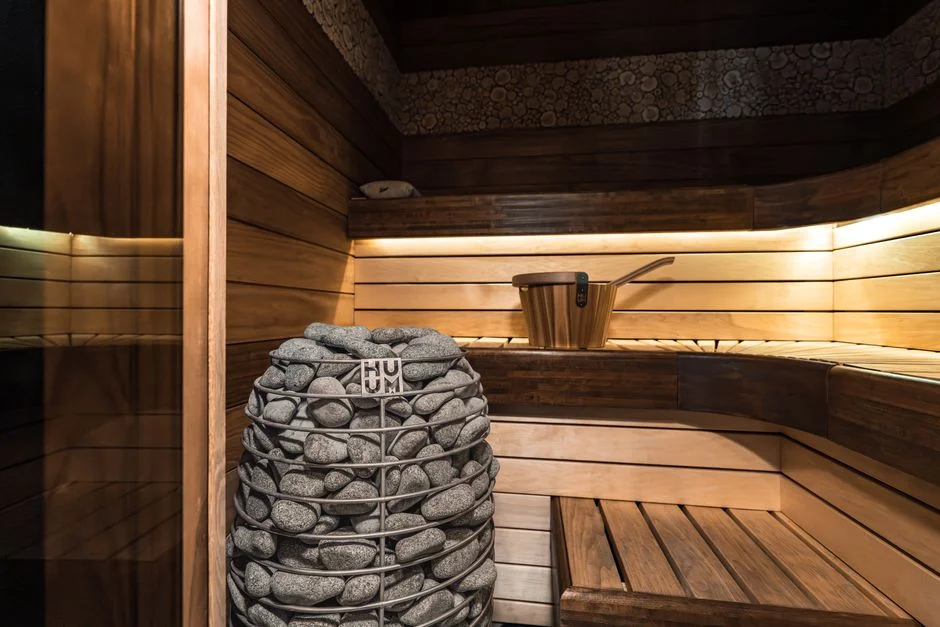
Matching Heater Capacity to Enclosure Volume
The fundamental calculation for any sauna heater , wood-burning or electric , is cubic feet of heated space versus heater output. Wood-burning units are typically rated in firebox cubic inches or maximum enclosure volume. Undersizing produces sessions that take too long to reach temperature or require constant stoking. Oversizing forces you to manage the fire more aggressively, which adds complexity and increases the risk of overshooting target temperature.
Account for insulation quality when sizing. A well-insulated enclosure needs less output to maintain 160, 185°F than a minimally insulated one. Exterior saunas in cold climates require more output than identical structures in temperate ones. Manufacturers’ enclosure volume ratings typically assume standard insulation , adjust downward if your build is under-insulated.
Wood Species Selection for Structural and Contact Surfaces
Not all sauna-appropriate wood species perform equally in every application. Cedar and aspen are low-thermal-conductivity woods , meaning they stay comfortable to touch at sauna temperatures. Hemlock is structurally denser and holds fasteners well, making it a strong choice for bench framing. Spruce is affordable and widely available but develops surface resin under high heat, which disqualifies it from bench and backrest use.
The distinction between structural and contact surfaces matters. Interior framing can use a wider range of species because it is not in direct contact with occupants. Bench tops, backrests, and any surface regularly touched bare-handed or sat on should use cedar, aspen, or hemlock specifically. Reviewing the full range of sauna wood and interior materials before specifying your build reduces the chance of a costly mid-project substitution.
Installation Environment: Indoor vs. Outdoor Placement
Indoor wood-burning sauna installations require a penetrating flue run through the ceiling and roof , a construction project that involves fire blocking, flashing, and in many jurisdictions, a permit. Outdoor freestanding sauna structures simplify the flue run in some respects but introduce weatherproofing requirements for both the stove and the structure.
That simplicity has real value for buyers who want outdoor sauna access without a major construction project. The trade-off is the sauna experience itself , infrared heat and wood-fire heat produce different physiological responses, and buyers with a strong preference for traditional steam löyly should understand that difference before choosing a prefabricated infrared option.
Maintenance Cadence for Wood Interiors
Wood sauna interiors require periodic maintenance to stay functional and comfortable. Bench and backrest surfaces that receive direct skin contact benefit from light sanding annually to remove any surface roughness that develops from moisture cycling. Sauna-grade oil application every one to two years , more frequently in high-use installations , prevents the drying and cracking that shortens wood service life.
Aromatic cedar naturally resists mold and mildew better than most softwoods, reducing the maintenance burden on wall cladding. Still, post-session ventilation matters regardless of species. Leaving the door ajar after each use allows moisture to escape and significantly extends the interval between required maintenance. Units left closed while still hot and damp develop surface degradation faster.
Accessory and Component Integration
A sauna’s usable quality is the sum of its components, not just the heater. Backrests, bench boards, wall cladding, and the anteroom environment all contribute to whether the overall experience is worth repeating. Buying quality accessories that match the primary heater’s durability tier makes sense , a premium cast iron wood stove in a space with rough-milled, untreated benches produces an inconsistent experience.
Consider the complete system: stove, bench material, backrest, ventilation, and the anteroom or changing space. Acoustic panels in the anteroom add measurable comfort for buyers who use the sauna for recovery or relaxation rather than purely for heat exposure. The investment in consistent material quality across the system pays back in daily use.
Frequently Asked Questions
Can I use a wood-burning sauna stove in an indoor sauna?
Wood-burning sauna stoves can be used indoors, but the installation requirements are significant. A properly sized flue must penetrate the ceiling and roof with appropriate fire blocking and flashing, and most jurisdictions require a permit. The stove also needs non-combustible floor protection and minimum clearances from walls and benches. Buyers in apartments or homes without an accessible roof line should realistically consider electric or infrared alternatives.
What wood species is best for sauna bench boards?
Cedar and aspen are the most recommended species for bench contact surfaces because their low thermal conductivity keeps the surface from becoming uncomfortably hot at typical sauna temperatures. Hemlock is a strong structural alternative for bench framing. Spruce and pine are generally avoided for contact surfaces because they can develop surface resin under sustained high heat, which is both unpleasant and potentially problematic for direct skin contact.
What is the difference between an infrared sauna and a traditional wood-fired sauna?
Infrared saunas use radiant heat panels to warm the body directly rather than heating the ambient air to Finnish sauna temperatures. Traditional wood-fired saunas heat the room to 160, 185°F and allow users to add water to heated stones for löyly , the steam that defines the classic sauna experience. Infrared units typically operate at lower ambient temperatures and do not support löyly. Buyers who value steam and high heat should factor this difference heavily into their decision.
Do sauna wood panels require sealing or finishing?
Interior sauna wood panels are generally not sealed with standard varnish or polyurethane , those coatings trap heat at the surface and can off-gas under sustained high temperatures. Cedar and aspen benches and cladding are typically left raw or treated with sauna-specific oil formulations.
How do I size a sauna stove for a two-person enclosure?
A standard two-person sauna enclosure runs approximately 100 to 150 cubic feet. Most manufacturers provide a maximum enclosure volume rating for their stoves , match that rating to your enclosure volume, then adjust for insulation quality. A well-insulated outdoor structure in a cold climate may need a slightly higher-rated unit to maintain target temperature efficiently. For prefabricated infrared units like the Outdoor Sauna 2 Person 1800W/110V, the heating panel wattage and enclosure volume are pre-matched by the manufacturer.
Where to Buy
Generic 16 Inch Long Aromatic Cedar Wood Boards. Rustic Wood for Crafts…See 16 Inch Long Aromatic Cedar Wood Boar… on Amazon