Outdoor Wood Burning Sauna Heaters: Buyer's Guide

Affiliate disclosure: Some links on this page are affiliate links. If you buy through them we earn a small commission at no extra cost to you. This never influences which products we recommend — we only suggest things we'd buy ourselves. Product prices and availability are accurate as of the date published and are subject to change. Always check Amazon for current pricing before purchasing. Learn more.
Quick Picks
Harvia Smart Sensor for Sauna Heaters, Compatible with Electric and Wood Burning Sauna Stoves, Adaptive Learning System, Integrated with MyHarvia App to Control Temperature, Humidity & Usage
Quality construction suited to regular home sauna use
Buy on AmazonHarvia Legend Wood Burning Sauna Stove, Traditional Wood Burning Stove for Indoor Heating, Premium Cast Iron Sauna Heater with Large Stone Capacity, Includes Sauna Rocks, Powerful 16kW Capacity
Quality construction suited to regular home sauna use
Buy on AmazonHarvia Pro 20 Wood Burning Sauna Heater, Quick Heating Stainless Steel Wood Burning Sauna Stove with Adjustable Feet, Includes Sauna Rocks, Premium Sauna Heater for Medium Sized Rooms, 24kW
Quality construction suited to regular home sauna use
Buy on Amazon| Product | Price Range | Top Strength | Key Weakness | Buy |
|---|---|---|---|---|
| Harvia Smart Sensor for Sauna Heaters, Compatible with Electric and Wood Burning Sauna Stoves, Adaptive Learning System, Integrated with MyHarvia App to Control Temperature, Humidity & Usage best overall | $$$ | Quality construction suited to regular home sauna use | Confirm specifications match your specific installation space and electrical requirements | Buy on Amazon |
| Harvia Legend Wood Burning Sauna Stove, Traditional Wood Burning Stove for Indoor Heating, Premium Cast Iron Sauna Heater with Large Stone Capacity, Includes Sauna Rocks, Powerful 16kW Capacity also consider | $$$ | Quality construction suited to regular home sauna use | Confirm specifications match your specific installation space and electrical requirements | Buy on Amazon |
| Harvia Pro 20 Wood Burning Sauna Heater, Quick Heating Stainless Steel Wood Burning Sauna Stove with Adjustable Feet, Includes Sauna Rocks, Premium Sauna Heater for Medium Sized Rooms, 24kW also consider | $$$ | Quality construction suited to regular home sauna use | Confirm specifications match your specific installation space and electrical requirements | Buy on Amazon |
| ALEKO Wood Burning Sauna Heater and Chimney Kit | Equivalent to 9-15 kW Electric Heater | Large Stone Capacity also consider | $$$ | Quality construction suited to regular home sauna use | Confirm specifications match your specific installation space and electrical requirements | Buy on Amazon |
| Stove Door Glass for Harvia Wood-Burning Sauna Stoves | Heat-Resistant & Clear Viewing Panel | Fits M3, 20, 26, 36 Models also consider | $$$ | Quality construction suited to regular home sauna use | Confirm specifications match your specific installation space and electrical requirements | Buy on Amazon |
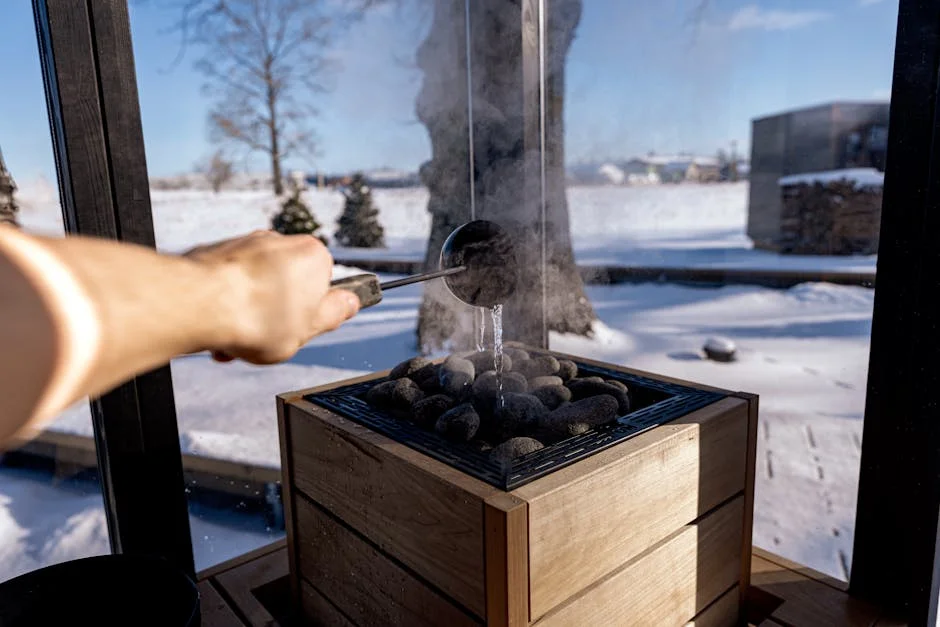
Choosing a heater is the most consequential decision in any outdoor wood burning sauna build. The stove determines how fast the room comes to temperature, how well it holds heat through a long session, and how much wood you burn doing it. A reliable stove running on split hardwood needs no electrical hookup , the fire is the system.
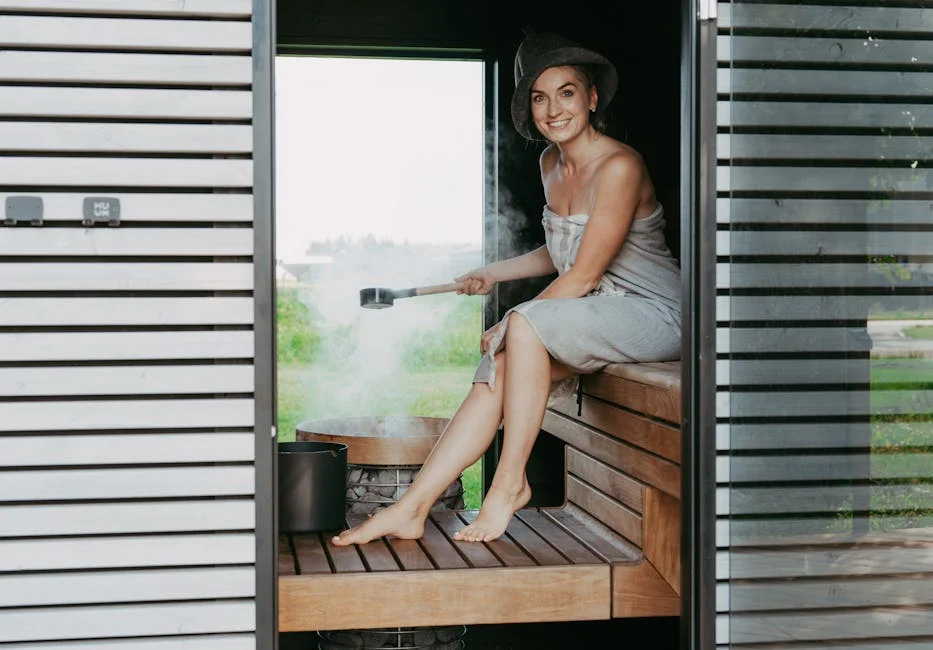
The Wood-Fired Saunas category covers everything from barrel kits to custom timber-frame builds, but the stove at the center of the room defines the experience. The options below range from compact cast iron heaters to high-output stainless models, with one smart-monitoring add-on for builders who want data alongside the smoke.
What to Look For in an Outdoor Wood Burning Sauna Heater
Output Rating and Room Volume
A stove’s kilowatt rating is the first number to match against your sauna’s cubic footage. Finnish convention generally calls for one kilowatt per cubic meter of room volume, adjusted upward for outdoor builds where wall insulation is typically thinner and ambient temperatures swing harder. An undersized stove will struggle to reach 80, 90°C and burn through wood quickly trying. Oversized stoves in small rooms can blast past a comfortable temperature before the stones are properly saturated.
Outdoor saunas in cold climates , Minnesota winters, for example , need meaningful headroom in the output rating. A stove rated for 10, 15 cubic meters may heat that same room comfortably in July but fall short in January without a well-insulated shell to back it up. Always calculate room volume including the ceiling slope and any dead airspace, then size up by at least one rating tier if the build is in a cold climate.
Stone Capacity and Löyly Quality
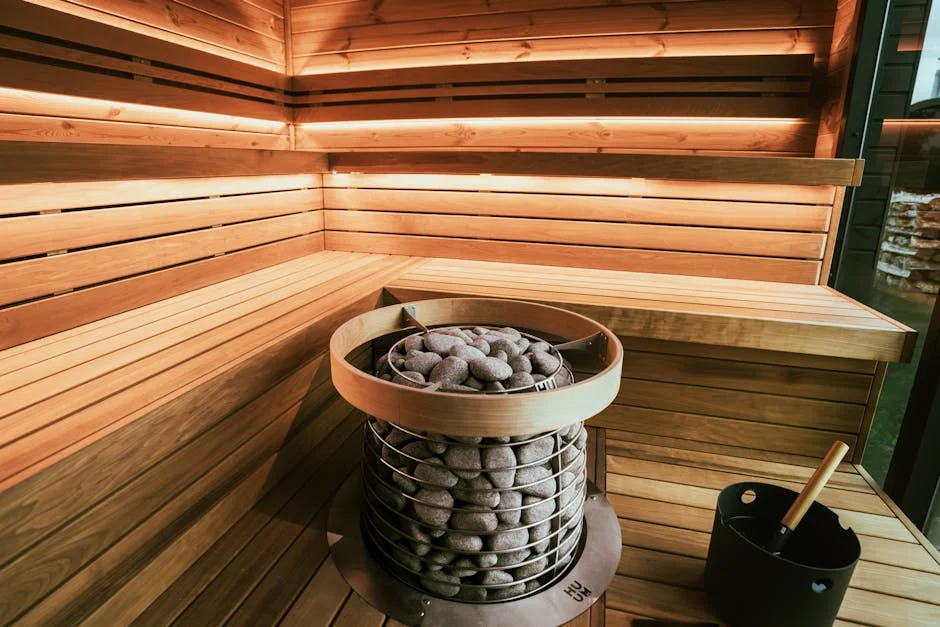
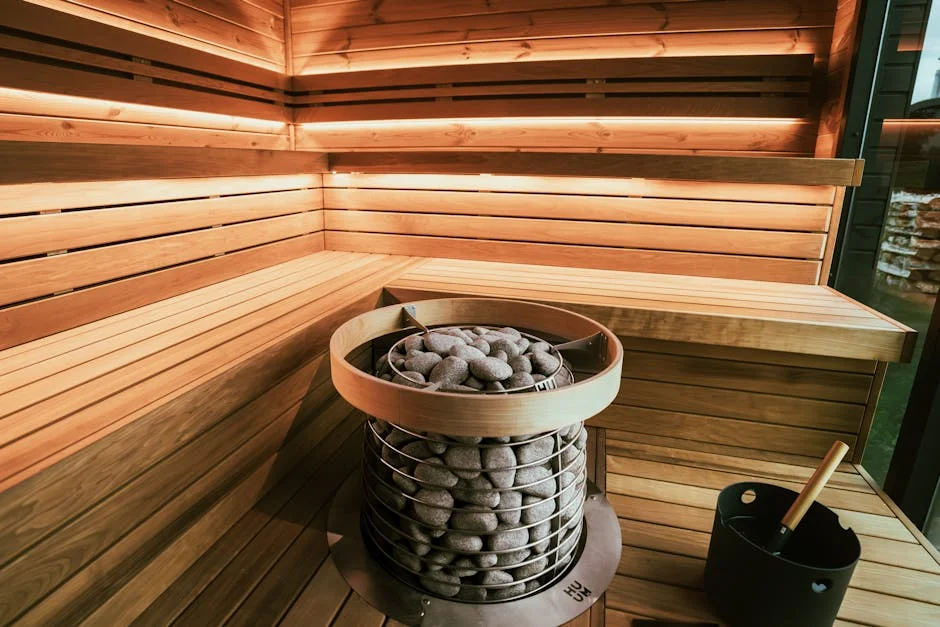
Stone capacity is not a secondary specification. Sauna rocks act as a thermal reservoir , they absorb heat from the fire, hold it after the wood burns down, and release it slowly as steam when water is ladled on. A stove with a small stone bed produces quick bursts of steam but loses heat fast. A deeper stone bed sustains löyly longer and allows for multiple rounds without restocking the fire.
Verified buyers across the Harvia range consistently note that larger stone capacity correlates with a more forgiving sauna session , the kind where the stones are still producing steam an hour in. Heavier olivine or diabase rocks transfer heat more efficiently than lightweight alternatives. The manufacturer specification for stone capacity is worth reading carefully; some stoves accept 20 kg, others 50 kg or more.
Heating Time and Wood Consumption
Most quality outdoor stoves reach target temperature in 45, 90 minutes depending on ambient conditions, insulation quality, and how well the fire is managed. Heating time matters practically: a stove that requires 2.5 hours of burn time before the room is usable changes the ritual. Field reports from r/Sauna consistently flag heating time as one of the most under-discussed stove variables.
Wood consumption per session depends on stove efficiency, wood species, and how long the session runs. Dense hardwoods , birch, oak, ash , burn longer and hotter than softwoods and are the standard in Nordic sauna culture. A well-maintained chimney draft is equally important; a partially blocked flue or poor draft will increase wood consumption and reduce heat output measurably.
Safety Clearances and Installation Requirements
Wood-burning sauna stoves radiate intense heat from every surface. Minimum clearances from combustible walls, benches, and flooring are not suggestions , they are fire safety minimums. Harvia’s installation specifications for most models call for at least 200 mm from combustible surfaces on the rear and sides, with front clearance extending further to accommodate ash door and loading access.
Chimney installation is equally critical. A single-wall chimney inside the sauna room radiates additional heat, which some builders use deliberately; a double-wall insulated chimney through the roof loses less heat to the outside. Either way, the chimney must penetrate the roof with an approved thimble and maintain clearance from framing. Consulting local building codes and, if possible, an experienced installer before finalizing the chimney plan is the most important step an outdoor builder can take.
Electricity Requirements , or the Lack of Them
One of the practical advantages of a wood-burning sauna is that it operates without any electrical infrastructure. No dedicated circuit, no GFCI outlet, no wiring run to the outbuilding. For off-grid cabins, remote properties, or simple backyard barrel saunas, that independence is a genuine benefit. The full wood-fired sauna options category includes models designed specifically for sites where running power is impractical.
The one exception is monitoring hardware. Smart sensors and temperature controllers require a power source and wireless connectivity , they are add-ons for owners who want data, not requirements for a functional sauna. The core system , stove, chimney, stones, wood , is entirely self-contained.
Top Picks
Harvia Legend Wood Burning Sauna Stove
The Harvia Legend Wood Burning Sauna Stove is the reference point for this category. Cast iron construction gives it thermal mass the stainless-steel stoves can’t match , the body itself holds heat and radiates it steadily long after the fire burns down to coals. Owner reviews consistently describe the Legend as one of the most even-heating stoves available at this output level, with a 16 kW rating that covers most standard outdoor sauna room sizes.
Stone capacity on the Legend is substantial. Verified buyers note that the included stones perform well, though many owners supplement with additional olivine for deeper löyly. The large firebox accommodates full-length splits without constant re-loading, which r/Sauna users cite as a meaningful quality-of-life difference during longer sessions.
Safety clearance requirements are specific and must be verified against your room dimensions before purchase. The cast iron body runs extremely hot on all surfaces, and the installation documentation should be followed precisely. For a traditional outdoor sauna where the stove is the centerpiece of the build, the evidence strongly favors the Legend as the best overall choice in this group.
Check current price on Amazon.
Harvia Pro 20 Wood Burning Sauna Heater
The Harvia Pro 20 Wood Burning Sauna Heater is built for rooms where more output is necessary , 24 kW handles larger sauna volumes and compensates for under-insulated outdoor builds. Stainless steel construction keeps weight down relative to cast iron, and the adjustable feet make leveling on uneven outdoor pads straightforward.
Field reports from verified buyers note that the Pro 20 reaches temperature quickly relative to its output class, which is consistent with stainless steel’s faster thermal transfer compared to cast iron. The trade-off is that stainless radiates heat less evenly after the fire stage , the stones carry more of the sustained heat load, so stone quality matters more here than with the Legend.
At 24 kW, this stove is most appropriate for sauna rooms above 12, 15 cubic meters or outdoor builds in particularly cold climates. For standard-sized outdoor saunas, the Pro 20 can easily overshoot comfortable temperatures in warm weather. Buyers with well-insulated, mid-sized rooms will generally find the Legend a better fit; the Pro 20 earns its role for larger or colder builds.
Check current price on Amazon.
ALEKO Wood Burning Sauna Heater and Chimney Kit
The ALEKO Wood Burning Sauna Heater and Chimney Kit addresses a friction point that stops many first builds: sourcing a compatible chimney kit separately. ALEKO bundles the stove and chimney components together, reducing the risk of mismatched components and simplifying the ordering process for buyers who are not yet familiar with chimney sizing standards.
Output equivalent to a 9, 15 kW electric heater positions this stove for small to medium sauna rooms. The stone capacity is large for this output class, and owner reviews note that the included stone bed produces satisfying steam at temperature. Heating time to temperature aligns with the mid-range of field reports , expect 60, 80 minutes in a well-insulated outdoor room under moderate ambient conditions.
For first-time outdoor sauna builders who want a complete, compatible system without cross-referencing chimney specifications against stove requirements, the ALEKO kit offers a practical lower-friction path. Construction quality is consistent with the price band, and the chimney components are purpose-matched to the stove , a detail worth more than it might initially appear.
Check current price on Amazon.
Harvia Smart Sensor for Sauna Heaters
The Harvia Smart Sensor for Sauna Heaters occupies a different category from the stoves above. It is a monitoring and control add-on , compatible with both electric and wood-burning stoves , that connects to the MyHarvia app to deliver temperature, humidity, and usage data to a phone.
For wood-burning sauna owners, the practical value is situational. The sensor gives visibility into sauna conditions without opening the door , useful for knowing when the room has reached target temperature from the house, or for tracking how sessions evolve over time. The adaptive learning system builds a profile of typical usage patterns, which r/Sauna users in monitoring-focused threads describe as a genuinely useful feature after the first several sessions.
A note worth stating plainly: this sensor requires power and wireless connectivity. It is not compatible with a fully off-grid setup, and it adds complexity to what is otherwise an electricity-free system. For owners who want that data layer and have the necessary infrastructure, the quality construction is consistent with Harvia’s broader product line and owner reviews are positive. For the majority of outdoor wood-burning sauna owners, the stove and stones are the investment; this sensor is an optional enhancement.
Check current price on Amazon.
Stove Door Glass for Harvia Wood-Burning Sauna Stoves
The Stove Door Glass for Harvia Wood-Burning Sauna Stoves is a replacement and upgrade component compatible with Harvia M3, 20, 26, and 36 models. Heat-resistant glass in a sauna stove door serves a practical purpose , monitoring fire status and combustion without opening the door , as well as an aesthetic one. Watching the fire through a clear panel is a legitimate part of the sauna experience for many owners.
Verified buyers who have replaced a damaged panel or upgraded from an opaque door report that the glass holds up well under regular use. Clarity remains consistent with the heat-resistant rating, and the fit on compatible Harvia models is precise. The installation process is straightforward for owners comfortable with basic mechanical work.
For Harvia wood-burning stove owners whose door glass is cracked, fogged, or missing, this is the correct replacement component. For owners of compatible models considering the upgrade from a solid door, owner consensus suggests the viewing experience is worth it , both for fire management and for the atmosphere it creates inside the room.
Check current price on Amazon.
Buying Guide
Matching Stove Output to Your Specific Build
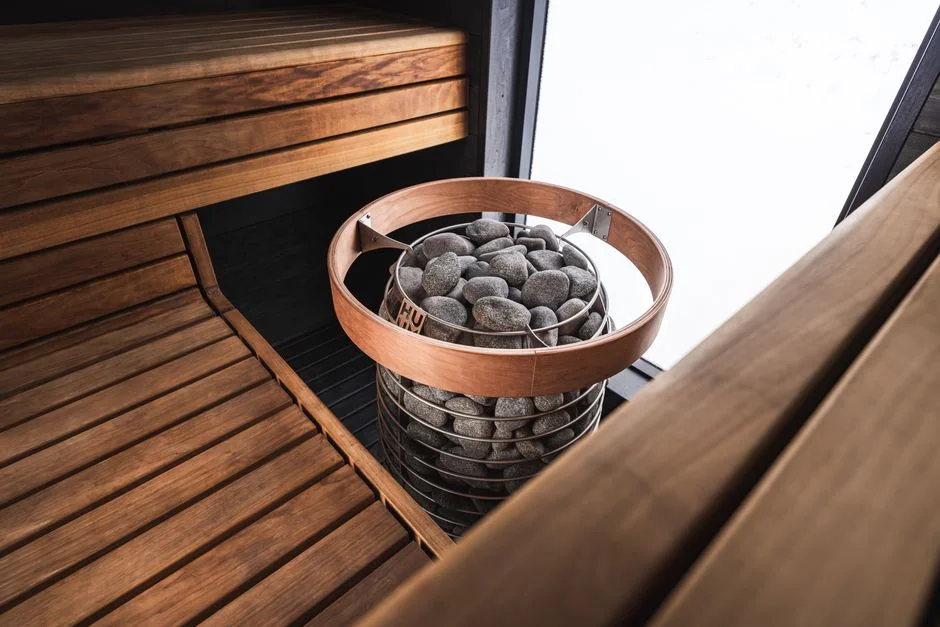
Room volume is the calculation that drives every other stove decision. Measure the interior length, width, and ceiling height , accounting for slope if the ceiling is peaked , and multiply to get cubic meters. For outdoor builds, add roughly 20, 25% to that figure to account for the additional heat loss through walls that are less insulated than an interior installation. The resulting number is the minimum stove output your build requires.
An outdoor sauna in a cold northern climate needs more margin than that calculation suggests. Verified buyer reports consistently show that under-sizing is the more costly mistake , a stove that struggles to reach temperature burns through wood inefficiently and produces a frustrating session rather than a restorative one.
Understanding Cast Iron vs. Stainless Steel
Cast iron and stainless steel behave differently through a sauna session, and the distinction matters for how you use the room. Cast iron , as in the Harvia Legend , heats more slowly but holds thermal mass in the body of the stove itself. After the fire burns to coals, the cast iron continues radiating heat into the room. Sessions with cast iron stoves tend to feel more sustained.
Stainless steel heats faster and transfers heat more directly to the stones. The stones carry more of the sustained-heat burden. For owners who want a shorter warmup time and are willing to manage the fire more actively, stainless is a reasonable choice. For the set-and-tend style of sauna use that Nordic tradition describes, cast iron produces a more forgiving room.
Chimney System Planning
The chimney is not a minor installation detail. The draft it creates determines combustion efficiency, wood consumption, and how much smoke stays inside versus exits cleanly. A properly sized, cleanly installed chimney makes a stove perform significantly better than the same stove with a marginal chimney.
Single-wall chimney pipe inside the sauna room adds radiant heat to the space , some builders use this deliberately on cold-climate builds. Double-wall insulated pipe maintains draft through cold outdoor sections and reduces creosote buildup. Both approaches are used, and both are addressed in the full range of wood-fired sauna builds. The choice depends on your roof penetration height and climate.
Stone Selection and Preparation
Stones are a consumable in the sense that they degrade over time under thermal cycling, but quality stones last years before replacement is necessary. Olivine and diabase are the standard recommendations across Finnish sauna culture and are the rocks most commonly specified by Harvia and other Nordic manufacturers. Avoid river stones or landscaping rocks , they fracture unpredictably under the heat-and-steam cycle and present a safety risk.
New stones should be heat-cured before their first full session. The standard process is to bring the stove to temperature with a small fire, allow the stones to heat and cool twice before adding water. Owner reports from r/Sauna regularly flag skipped curing as the cause of early stone cracking.
Ventilation and Air Supply
A wood-burning stove requires a steady supply of fresh air for combustion, and that air has to come from somewhere in the sauna room. Outdoor sauna buildings with tight construction need a fresh-air intake , typically a low vent near the floor , to prevent the stove from drawing air down the chimney or creating negative pressure that degrades the fire. This is frequently under-discussed in builder guides focused on stove selection.
Room ventilation also affects the sauna session itself. Upper-bench heat and lower-bench coolness are managed through vent placement, and a well-ventilated sauna is more comfortable across all bench levels. Planning the intake and exhaust vents before framing is closed is considerably easier than retrofitting them later.
Frequently Asked Questions
How long does it take an outdoor wood burning sauna to reach temperature?
Most quality outdoor wood-burning stoves reach 80, 90°C in 45, 90 minutes under reasonable ambient conditions with a well-insulated room. Cold climates and poorly insulated walls extend that range toward 90 minutes or beyond. Heating time depends heavily on wood species, fire management, and chimney draft quality , these variables matter as much as stove output rating. The Harvia Legend and Pro 20 both have strong owner records for consistent warmup times.
How much wood does a sauna session typically use?
A typical 90-minute outdoor sauna session consumes roughly 3, 6 kg of dry hardwood, depending on stove efficiency, ambient temperature, and how long the fire is maintained. Dense hardwoods , birch, oak, ash , burn longer and produce more heat per kilogram than softwoods. Owners who season their own wood and maintain a clear chimney draft report the most efficient fuel consumption relative to heat output.
Do wood-burning saunas require electricity?
No. Wood-burning saunas are entirely self-contained , the fire provides all heat, and no electrical infrastructure is required. The one exception is monitoring hardware like the Harvia Smart Sensor, which requires power and wireless connectivity. For off-grid cabins or builds where running electrical is impractical, a wood-burning stove is the functionally correct choice.
What is the difference between the Harvia Legend and the Harvia Pro 20?
The Harvia Legend uses cast iron construction at 16 kW, which gives it thermal mass and sustained radiant heat after the fire stage. The Harvia Pro 20 is stainless steel at 24 kW, prioritizing faster heat transfer and higher output for larger rooms or colder climates. For standard outdoor sauna rooms in most climates, the Legend’s even, sustained heat is the stronger fit. The Pro 20 is the right tool for large rooms or severely cold builds.
What type of rocks should I use in an outdoor wood burning sauna stove?
Olivine and diabase are the standard recommendations, widely used across Finnish sauna tradition and specified by Harvia for their stoves. Both handle repeated thermal cycling without fracturing. Avoid river stones, landscaping rock, or any stone with unknown mineral content , these can crack violently under heat-and-steam conditions. New stones should be heat-cured through two slow heating cycles before water is added for the first time.
Where to Buy
Harvia Smart Sensor for Sauna Heaters, Compatible with Electric and Wood Burning Sauna Stoves, Adaptive Learning System, Integrated with MyHarvia App to Control Temperature, Humidity & UsageSee Smart Sensor for Sauna Heaters, Compa… on Amazon