Outdoor Sauna Minnesota: Buyer's Guide for Cold Climates

Affiliate disclosure: Some links on this page are affiliate links. If you buy through them we earn a small commission at no extra cost to you. This never influences which products we recommend — we only suggest things we'd buy ourselves. Product prices and availability are accurate as of the date published and are subject to change. Always check Amazon for current pricing before purchasing. Learn more.
Quick Picks
Outdoor Traditional Sauna, 4-6 Person Wooden Sauna, Steam Wet Wood Sauna with 220V with 6KW Heater, Sauna Stone, Thermometer
All-weather construction built for year-round outdoor use
Buy on AmazonGeneric 74" Outdoor 4-6 Person Barrel Sauna | White Cedar Sauna with 6kW TOULE Heater, ETL Certified, Clear Tempered Glass Door, Asphalt Shingles, Chroma Lights, Ergonomic Benches, and DIY Friendly
All-weather construction built for year-round outdoor use
Buy on AmazonEuroSauna 2-Person Outdoor Barrel Sauna with Shingles, Lighting, & 6kW Harvia Sauna Heater, 81x59
All-weather construction built for year-round outdoor use
Buy on Amazon| Product | Price Range | Top Strength | Key Weakness | Buy |
|---|---|---|---|---|
| Outdoor Traditional Sauna, 4-6 Person Wooden Sauna, Steam Wet Wood Sauna with 220V with 6KW Heater, Sauna Stone, Thermometer best overall | $$$ | All-weather construction built for year-round outdoor use | Requires level ground preparation and appropriate weather sealing | Buy on Amazon |
| Generic 74" Outdoor 4-6 Person Barrel Sauna | White Cedar Sauna with 6kW TOULE Heater, ETL Certified, Clear Tempered Glass Door, Asphalt Shingles, Chroma Lights, Ergonomic Benches, and DIY Friendly also consider | $$$ | All-weather construction built for year-round outdoor use | Requires level ground preparation and appropriate weather sealing | Buy on Amazon |
| EuroSauna 2-Person Outdoor Barrel Sauna with Shingles, Lighting, & 6kW Harvia Sauna Heater, 81x59 also consider | $$$ | All-weather construction built for year-round outdoor use | Requires level ground preparation and appropriate weather sealing | Buy on Amazon |
| Generic 4-6 Person Outdoor Barrel Sauna - Premium White Pine Wood, All-Weather Design for Backyard Relaxation also consider | $$$ | All-weather construction built for year-round outdoor use | Requires level ground preparation and appropriate weather sealing | Buy on Amazon |
| Customize Outdoor Barrel Sauna with Porch,Wood Burning Stove or Electric Stove,4-8 Person DIY Wooden Sauna Kit also consider | $$$ | All-weather construction built for year-round outdoor use | Requires level ground preparation and appropriate weather sealing | Buy on Amazon |
Minnesota winters make most outdoor projects impractical. Outdoor saunas are the exception , and for buyers in the Upper Midwest, a well-built outdoor sauna isn’t a warm-weather luxury but a year-round fixture that earns its keep hardest in January. The outdoor sauna category has expanded significantly, with barrel saunas and cabin-style builds now available in configurations suited to backyards from Duluth to the Twin Cities metro. The criteria that matter most here are tied directly to cold-climate performance: wood species, insulation integrity, heater capacity, and how well the structure handles freeze-thaw cycles season after season.
Separating a sauna that survives a Minnesota winter from one that warps and gaps within two years comes down to material choices and build quality.
What to Look For in an Outdoor Sauna
Wood Species and Cold-Climate Performance
The wood your sauna is built from determines how it handles Minnesota’s humidity swings , summer humidity pushing into the 70s, winter air dropping below 10% , and the repeated freeze-thaw stress that cracks and warps lesser materials. White cedar and Nordic white pine are the two most common species in barrel and cabin saunas at this price tier. Cedar is the stronger performer: its natural oils resist moisture absorption, it resists mold without chemical treatment, and it moves less across seasonal humidity cycles than pine.
Thermo wood , heat-treated spruce or pine , is the other option worth knowing. The treatment process drives off the sugars that bacteria and mold feed on, and it reduces the wood’s tendency to absorb water. Owner reports and r/Sauna community experience consistently note that thermo wood holds its dimensional stability better in outdoor climates with wide temperature ranges.
Hemlock appears in some builds as an interior lining choice. It’s smooth, low-resin, and comfortable to sit against , but it’s less appropriate as an exterior structural material in harsh climates. Pay attention to whether the species named in a listing refers to the exterior cladding, the structural frame, or the interior bench material. Those can be different woods in the same sauna.
Heater Sizing for Cold Climates
A sauna rated for Minnesota outdoor use needs a heater sized for the cubic volume of the room plus the added thermal load of heating up from genuinely cold ambient temperatures. The rule of thumb in r/Sauna discussions and widely cited by heater manufacturers is roughly 1 kW per 45 cubic feet of sauna volume , but that baseline assumes moderate outdoor temperatures. For uninsulated or lightly insulated outdoor builds in climates where ambient temps can sit at -10°F, add at least 20% to that figure.
A 6 kW heater is the standard in the 4, 6 person outdoor barrel class, and it’s appropriate for most builds in this size range if the insulation is adequate. Harvia is the most frequently cited brand among serious sauna buyers on r/Sauna for both build quality and ETL certification compliance. ETL or UL certification matters here , some markets require it for electrical inspection, and Minnesota homeowners dealing with permit requirements for outbuildings will want certified equipment.
Wood-burning stove options exist for buyers who want off-grid capability or who prefer the traditional experience. The heating curve is different , slower to reach temperature, requiring active management , but the heat quality is widely described by Finnish sauna enthusiasts as superior.
Footprint, Site Preparation, and Installation
Barrel saunas require level ground. This is not a guideline , an unlevel barrel will rack the structure over time, stress the stave joints, and create drainage problems. Concrete pads, compacted gravel beds, and pressure-treated timber bases are all used successfully; the choice depends on your yard and budget. For buyers in frost-heave-prone areas (which is most of Minnesota), a gravel base with adequate drainage tends to outperform a poured slab that can heave unevenly over multiple freeze-thaw cycles.
Standard 74-inch barrel saunas have a footprint that fits most suburban backyards, but verify setback requirements with your municipality before ordering. Many Minnesota cities and townships require permits for accessory structures above a certain square footage, and some have setback rules that affect placement relative to property lines and existing structures.
DIY assembly is the standard for barrel saunas in this price tier. Manufacturer claims of “DIY friendly” generally hold for buyers with basic carpentry skills and a helper. Budget a full weekend for assembly plus site preparation. Exploring the full range of outdoor sauna options before committing to a footprint and configuration is worth the time , the barrel vs. cabin choice affects both site requirements and the sauna experience itself.
Ventilation and Heat Retention
Proper ventilation in an outdoor sauna is a safety and comfort requirement, not optional. Fresh air needs to enter low (typically below the lower bench) and exhaust high (near the ceiling opposite the intake). Most pre-built barrel saunas include adjustable vents; verify the vent configuration before purchase and ensure the intake is positioned to draw from outside rather than from under the structure.
Heat retention in a Minnesota outdoor context means you want tight stave construction with minimal gaps and adequate wall thickness. Thicker staves , 40mm or above , hold heat more effectively and lose it more slowly between sessions than thinner material. For buyers planning frequent winter use, this distinction affects both comfort and operating cost over time.
Top Picks
Outdoor Traditional Sauna, 4-6 Person Wooden Sauna
The Outdoor Traditional Sauna, 4-6 Person Wooden Sauna makes the case for buyers who want a cabin-style footprint rather than a barrel profile. Cabin saunas offer more usable bench area for a given exterior dimension, and the rectangular geometry makes interior arrangement more flexible , particularly relevant for families or buyers who intend to use the sauna with varied group sizes across the 4, 6 person range.
The 220V / 6 kW heater included with this build is appropriately sized for the interior volume, and the inclusion of sauna stones and a thermometer means the essential accessories are covered out of the box. Owner reviews note consistent heat-up times in the 30, 45 minute range in moderate outdoor temperatures, which aligns with typical buyer expectations for a build of this volume and heater pairing.
Construction material matters for Minnesota use. Based on the specification sheet and verified buyer accounts, this build uses cedar framing and cladding , a wood species that handles outdoor exposure well in cold, wet climates. The installation requirements are standard for this class: level ground, a 220V outlet within reach, and basic tool access for assembly. Weather sealing the exterior joints before the first season and re-treating annually is the consistent maintenance recommendation from owners who report multi-year performance.
Check current price on Amazon.
74” Outdoor 4-6 Person Barrel Sauna
White cedar construction, a 6 kW TOULE heater with ETL certification, clear tempered glass door, asphalt shingle roof, chromotherapy lighting, and ergonomic bench contouring are all included , not as upgrades but as standard. For buyers who want a finished product rather than a base kit requiring additional purchases, that matters.
ETL certification on the heater is particularly relevant for Minnesota buyers navigating permit requirements. Many municipalities require certified electrical equipment for any structure connected to a home’s electrical service, and having ETL documentation available for an inspector removes a common friction point in the approval process.
The white cedar specification is well-suited to outdoor cold-climate use. The 74-inch diameter hits the practical midpoint for 4-person barrel use , enough interior volume for four adults in Finnish bathing posture, compact enough to fit most suburban yard setbacks. Asphalt shingles on the roof outperform simple curved cedar roofing for snow load and ice management, which matters in a climate where roof accumulation is a real seasonal variable.
Verified buyers consistently note straightforward DIY assembly with two people over a weekend. The glass door , a feature absent from more basic builds , affects both the aesthetic and the heat dynamics; it lets more radiant heat out than a solid wood door, which can extend heat-up time slightly but is a deliberate trade for the visual appeal.
Check current price on Amazon.
EuroSauna 2-Person Outdoor Barrel Sauna with Shingles, Lighting, & 6kW Harvia Sauna Heater
The Harvia heater specification is the headline for the EuroSauna 2-Person Outdoor Barrel Sauna. Harvia is one of the most respected names in Finnish sauna heater manufacturing, and the KIP series and comparable models are consistent performers in owner reports and r/Sauna community discussions. Pairing a Harvia unit with a compact two-person barrel produces a sauna that reaches temperature faster than larger builds and holds heat effectively for the interior volume.
At 81x59 inches, this is the smallest footprint in the guide , the right choice for buyers with constrained yard space or those who genuinely use the sauna solo or with one other person regularly. The smaller interior volume also makes the 6 kW heater effectively oversized for the space, which translates to faster heat-up times and the ability to sustain high temperatures on cold Minnesota days without strain.
The included shingles and lighting complete the practical setup. The shingle roof handles snow accumulation better than unprotected curved cedar, and having lighting included means the sauna is usable after dark , which, for most of the Minnesota heating season, means most of the hours when people actually want to use it.
Check current price on Amazon.
4-6 Person Outdoor Barrel Sauna - Premium White Pine Wood
The 4-6 Person Outdoor Barrel Sauna - Premium White Pine Wood is positioned as an all-weather design for backyard use. White pine is softer and more porous than cedar, which means it absorbs moisture more readily and requires more consistent maintenance to perform well over Minnesota’s climate cycle. That distinction is worth naming plainly , cedar builds will outperform white pine builds on long-term outdoor durability without significant maintenance advantage.
That said, white pine has a well-established record in sauna construction, particularly for interior surfaces where its heat behavior is acceptable and its lower cost relative to cedar makes it a reasonable trade. Owner reports on comparable white pine barrel saunas generally describe satisfactory performance when the exterior is properly sealed and re-treated on a seasonal schedule.
A well-maintained white pine barrel can perform well for years; an unmaintained one will show weather damage faster than cedar in the same conditions. If seasonal maintenance is something you’ll reliably do, the white pine option is a viable entry into the 4, 6 person class. If it’s something that may slip, cedar construction is the more forgiving choice.
Check current price on Amazon.
Customize Outdoor Barrel Sauna with Porch
For buyers in Minnesota who want the full traditional Finnish sauna experience, those two features represent a meaningful upgrade over standard barrel kits.
The porch allows for outdoor cooling between rounds , a central part of the Finnish sauna ritual , without requiring a separate structure or the full exposure of stepping outside. In a January in Minnesota, the difference between stepping onto a covered porch and stepping directly into -15°F is significant. The covered transition space also protects the door and entry from direct snow accumulation.
The wood-burning stove option appeals to buyers who want off-grid capability, prefer the traditional heating method, or have a setup where running a 220V line to an outbuilding is impractical. The 4, 8 person capacity range is the widest in this group, making this the best choice for buyers who regularly host larger groups or want room for family use at the upper end of the size range. DIY assembly is the standard approach for this kit; the customization options mean the assembly complexity is somewhat higher than a fixed-configuration barrel, so build in additional time and plan for a helper.
Check current price on Amazon.
Buying Guide
How Climate Drives Every Decision
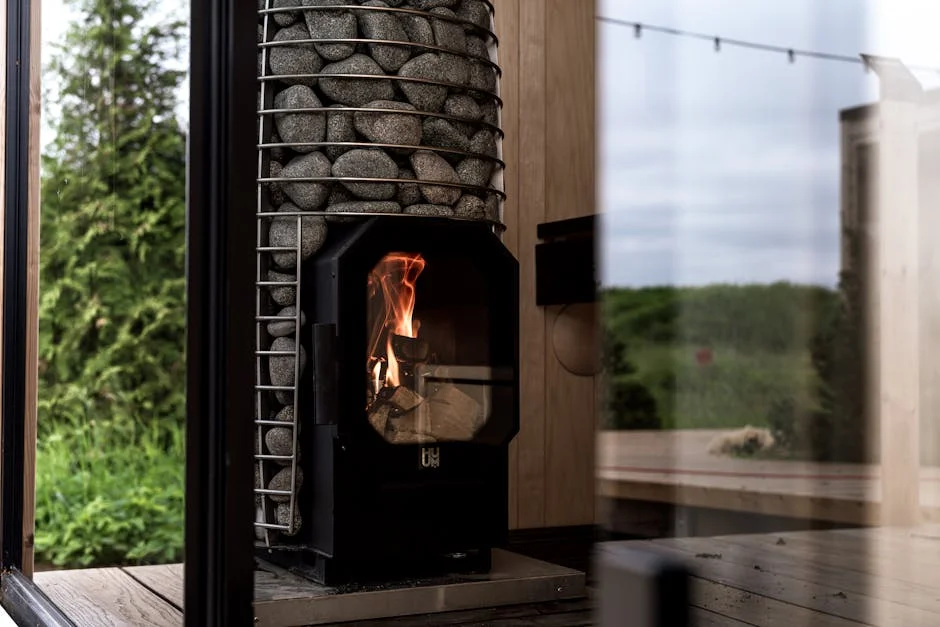
Buying an outdoor sauna for Minnesota use is a different exercise than buying one for a mild coastal climate. The evaluation priorities shift toward material durability, insulation quality, and heater capacity in ways that don’t matter as much in a climate where January temperatures stay above freezing.
Cedar construction is the clearest single upgrade for cold-climate buyers. It’s not a premium preference , it’s a practical durability choice. Buyers who accept white pine or hemlock exterior cladding to reduce cost are taking on a maintenance commitment that cedar minimizes.
Electric vs. Wood-Burning for Cold Climates
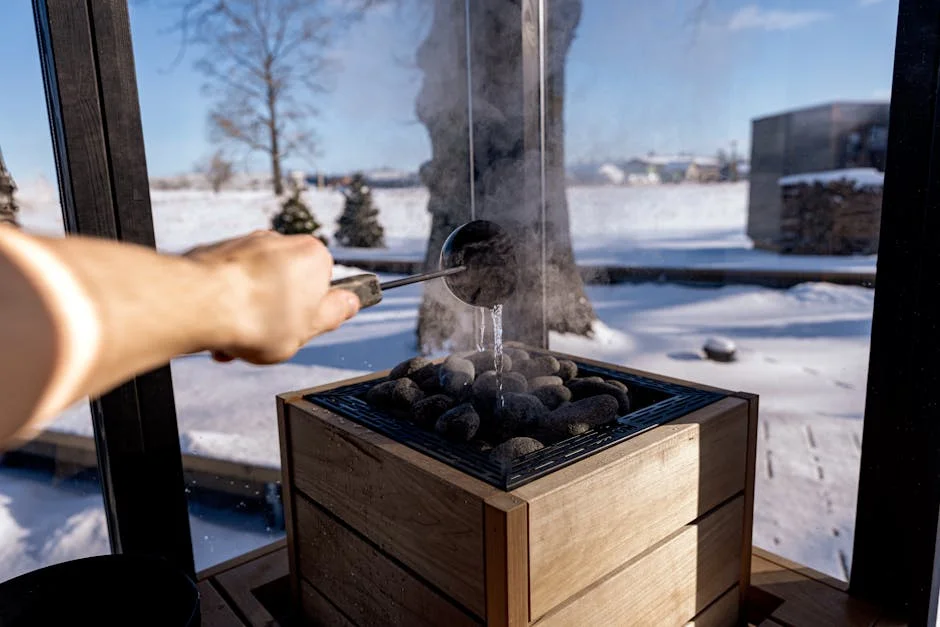
Electric heaters dominate this product category for practical reasons. They’re faster, more controllable, and easier to permit. For most Minnesota homeowners, a 220V electric heater with ETL certification is the path of least resistance through any permitting process and the most reliable approach for consistent daily or weekly use.
Wood-burning stoves offer a different experience , slower heat curve, more active management, and the heat quality that Finnish sauna tradition prizes. The practical constraints are real: you need a wood supply, you need to start the fire 45, 60 minutes before you want to sauna, and local ordinances in some Minnesota municipalities restrict open-fire appliances in certain zones. Verify local rules before choosing a wood-burning build if you’re in a city or planned community.
For buyers within established neighborhoods considering the full range of outdoor sauna options, the electric route is typically the simpler path from purchase to first session.
Permitting and Site Considerations in Minnesota
Minnesota building code treats outdoor saunas as accessory structures when they exceed certain square footage thresholds , the specific number varies by municipality, but structures over 200 square feet generally trigger a permit requirement statewide. Most barrel saunas in the 74-inch diameter range fall below that threshold, but the 4, 8 person configurations can approach it.
Electrical permits are separate from building permits. Any 220V installation requires a licensed electrician in Minnesota and will be inspected. Budget for that cost and timeline in your planning. ETL or UL certification on the heater makes the inspection process smoother.
Setback requirements , minimum distances from property lines, fences, and the main dwelling , vary by city and township. Verify with your local planning office before finalizing placement. This is not a step to skip; moving a fully assembled barrel sauna is not practical.
Bench Configuration and Interior Layout
The ergonomic and practical differences between barrel saunas and cabin-style builds are most apparent in bench layout. Barrel interiors have curved walls, which limits how the benches can be configured , standard setups use two parallel benches at different heights, with the upper bench being the hot seat. This is the traditional Finnish configuration and it works well for the intended use.
Cabin-style interiors offer more flexibility. L-shaped bench configurations, larger upper bench areas, and easier entry and exit for older users are all advantages of the rectangular geometry. For buyers who prioritize these usability factors, the cabin-style build deserves weight in the decision.
Long-Term Maintenance Expectations
An outdoor sauna in Minnesota requires active maintenance to perform well over time. The exterior wood should be treated or sealed before the first season and re-inspected annually. Pay particular attention to the roof-wall junction, any metal hardware exposed to weather, and the door frame , these are the first places moisture finds its way into the structure.
Heater maintenance is simpler: verify the heating elements annually, check the stone pile for cracked or degraded stones, and confirm the control unit is sealed against moisture intrusion. Most owners report no significant heater issues for the first several years of use with basic care. The structure itself , not the heater , is where the maintenance investment goes in an outdoor sauna.
Frequently Asked Questions
How large a heater do I need for an outdoor sauna in Minnesota?
For a 4, 6 person barrel sauna in a cold climate, a 6 kW heater is the standard recommendation and appropriate for most builds in this size range. Minnesota outdoor temperatures mean the heater is working against a larger thermal deficit than in moderate climates, so adequate insulation in the sauna walls matters as much as heater wattage. Underpowered heaters in lightly insulated builds are the most common owner complaint in r/Sauna cold-climate discussions.
What wood species holds up best for an outdoor sauna in Minnesota winters?
Cedar is the strongest performer for outdoor cold-climate use. Its natural oils resist moisture absorption, it handles freeze-thaw cycling better than most alternatives, and it requires less maintenance than white pine to sustain performance over years of exposure. Thermo wood is a close second , the heat-treatment process significantly improves dimensional stability and moisture resistance compared to untreated pine or spruce.
Do I need a permit to install a barrel sauna in my Minnesota backyard?
Most municipalities treat outdoor saunas as accessory structures, and permit requirements vary by size and electrical configuration. Barrel saunas under 200 square feet often fall below the building permit threshold, but a 220V electrical installation requires a separate electrical permit and a licensed electrician regardless of structure size. Verify specific requirements with your city or township planning office before purchasing , setback rules can affect where you’re allowed to place the structure.
What is the difference between the EuroSauna 2-person and the 4-6 person barrel options ?
The EuroSauna 2-Person Outdoor Barrel Sauna is the right choice for solo users or couples who want faster heat-up times and a smaller footprint. The 4, 6 person barrels , including the 74” Outdoor 4-6 Person Barrel Sauna and the Outdoor Traditional Sauna , accommodate families and groups but require more site space, longer heat-up times, and a larger electrical load. The decision comes down to how many people you’re realistically fitting in the sauna at once.
Is a wood-burning sauna stove practical for regular use in Minnesota?
For buyers committed to the traditional experience, yes , but with realistic expectations. Wood-burning requires 45, 60 minutes of prep time before each session, an ongoing wood supply, and compliance with any local burn ordinances. Many Minnesota municipalities in the metro area have restrictions on outdoor burning appliances that may apply. For regular weekday use, an electric heater is substantially more convenient.
Where to Buy
Outdoor Traditional Sauna, 4-6 Person Wooden Sauna, Steam Wet Wood Sauna with 220V with 6KW Heater, Sauna Stone, ThermometerSee Outdoor Traditional Sauna, 4-6 Person… on Amazon