Cedar Sauna Wood Buyer's Guide: Choose the Right Products

Affiliate disclosure: Some links on this page are affiliate links. If you buy through them we earn a small commission at no extra cost to you. This never influences which products we recommend — we only suggest things we'd buy ourselves. Product prices and availability are accurate as of the date published and are subject to change. Always check Amazon for current pricing before purchasing. Learn more.
Quick Picks
Generic 16 Inch Long Aromatic Cedar Wood Boards. Rustic Wood for Crafts…
Quality construction suited to regular home sauna use
Buy on AmazonOutdoor Sauna 2 Person 1800W/110V Low EMF Dry Sauna Infrared Sauna for Home Inner Board Hemlock Wood/Outer Board Red Cedar, 8 Heating Panels with LCD Control Panel/Speaker and Tempered Glass Door
Quality construction suited to regular home sauna use
Buy on AmazonNorthwood Sauna - Sauna Backrest - Handmade from Canadian Red Cedar Wood - Ergonomic S-Shape Back Support & Non-Slip Pads
Quality construction suited to regular home sauna use
Buy on Amazon| Product | Price Range | Top Strength | Key Weakness | Buy |
|---|---|---|---|---|
| Generic 16 Inch Long Aromatic Cedar Wood Boards. Rustic Wood for Crafts… best overall | $$ | Quality construction suited to regular home sauna use | Confirm specifications match your specific installation space and electrical requirements | Buy on Amazon |
| Outdoor Sauna 2 Person 1800W/110V Low EMF Dry Sauna Infrared Sauna for Home Inner Board Hemlock Wood/Outer Board Red Cedar, 8 Heating Panels with LCD Control Panel/Speaker and Tempered Glass Door also consider | $$ | Quality construction suited to regular home sauna use | Confirm specifications match your specific installation space and electrical requirements | Buy on Amazon |
| Northwood Sauna - Sauna Backrest - Handmade from Canadian Red Cedar Wood - Ergonomic S-Shape Back Support & Non-Slip Pads also consider | $$ | Quality construction suited to regular home sauna use | Confirm specifications match your specific installation space and electrical requirements | Buy on Amazon |
| All Natural Sauna Wood Oil for Restoring and Protecting Saunas | Interior and Exterior Application | Cedar Scent | 1 Gallon Size also consider | $$ | Quality construction suited to regular home sauna use | Confirm specifications match your specific installation space and electrical requirements | Buy on Amazon |
| Wood Defender Transparent Fence Stain and Seal Cedar Tone 1-Gallon | Oil-Based Exterior Fence Coating | Long-Lasting Color Protection for Wood Fences also consider | $$ | Quality construction suited to regular home sauna use | Confirm specifications match your specific installation space and electrical requirements | Buy on Amazon |
Cedar is one of the most trusted wood species in sauna building , prized for its natural resistance to moisture, its stability under heat cycling, and the warm, resinous scent that defines the sauna experience for many bathers. Choosing the right cedar products matters whether you’re planning a full sauna build, upgrading interior components, or protecting existing wood. The range of sauna wood and materials available today runs from raw boards to pre-finished accessories to specialty coatings.
The choices aren’t always obvious. Cedar boards, pre-built cedar enclosures, cedar accessories, and wood-care products each serve distinct roles , and selecting the wrong product for a given application creates maintenance problems or comfort issues that are difficult to reverse.

What to Look For in Cedar Sauna Wood
Species and Grade
Not all cedar performs equally in sauna conditions. Western red cedar is the benchmark species for sauna interiors: low density, high dimensional stability, excellent resistance to moisture-driven warping, and a resin content low enough that hot benches don’t become a burn hazard. Aromatic eastern red cedar , sometimes marketed as aromatic cedar , has a higher essential oil content, which produces a stronger scent but also creates a higher risk of resin bleed at elevated temperatures. For wall and ceiling cladding or bench surfaces that contact skin, western red cedar remains the stronger choice.
Grade matters almost as much as species. Clear or “A-grade” cedar has minimal knots, tight grain, and consistent color. Knotty grades are less expensive and acceptable for walls, but knots in bench boards create hot spots and splinter risk , owner reports in r/Sauna consistently flag loose knots as a long-term problem on high-traffic horizontal surfaces. Select the clearest grade the budget allows for any surface where skin makes direct contact.
Moisture Content and Dimensional Stability
Cedar delivered with high moisture content will shrink and gap as it acclimates to the dry heat of a sauna. Kiln-dried lumber , typically below 12% moisture content , is the correct starting point. Boards that arrive at ambient moisture levels above 15% will move significantly through the first season of use, opening gaps at tongue-and-groove joints and causing fasteners to back out. Verified buyer reports for cedar sauna products consistently note that boards pre-acclimated in the sauna space for 48, 72 hours before installation perform better long-term than boards installed immediately.
Dimensional stability also determines how the wood responds to repeated heat cycling. Thinner boards (5/16 inch to 3/8 inch) move less across their width than thicker material, which is why most sauna-specific profiles are thinner than standard lumber dimensions. Exploring the full range of sauna wood and materials before committing to a board profile is worth the time , the profile choice affects both installation method and long-term movement.
Surface Texture and Splinter Risk
Bench and backrest surfaces require special attention. Rough-sawn cedar holds heat unevenly and creates splinter exposure , neither is acceptable for skin-contact surfaces. Sauna-grade cedar boards are typically sanded to 120, 180 grit and left unfinished or treated with a purpose-formulated sauna oil. Do not use conventional exterior stains or sealers on interior surfaces; they seal the grain in ways that trap heat and can off-gas at sauna temperatures.
Smooth surfaces also make cleaning easier. Sauna benches accumulate perspiration and should be wiped down regularly; open-grain or rough-textured surfaces harbor bacteria and are harder to maintain. The ideal finish for bench wood is no finish at all , properly dried, tight-grain cedar sheds moisture effectively on its own , or a food-safe penetrating oil that doesn’t form a surface film.
Treatment and Finishing Requirements
Cedar used on sauna exteriors faces a different set of conditions than interior surfaces. Exterior cedar sees UV exposure, precipitation, and temperature swings far more extreme than interior heat cycling. An exterior cedar sauna enclosure left untreated will gray and check within one to two seasons in most climates. Purpose-formulated penetrating oil or transparent stain , applied to clean, dry wood , provides meaningful protection without obscuring the grain.
Interior cedar surfaces generally perform best unfinished or with a single coat of sauna-specific wood oil. Multiple coats of oil on bench surfaces create a tacky residue that transfers to skin. The goal for interior treatment is protection at the end-grain and at cut edges, not a surface coating.
Top Picks
16 Inch Long Aromatic Cedar Wood Boards
16 Inch Long Aromatic Cedar Wood Boards represent the aromatic eastern red cedar category , a species choice worth understanding before purchasing. The boards’ primary appeal is the pronounced cedar fragrance, which is stronger than western red cedar due to higher essential oil content. For decorative applications, craft projects, closet lining, or accent wall panels in a sauna anteroom, that scent profile is a genuine asset.
For main sauna interior use, particularly on bench surfaces, the higher resin content requires attention. Owner reports note that the aromatic species performs well on walls and ceilings where direct skin contact is minimal. The boards are noted for clean milling and consistent dimension across a pack, which matters for tongue-and-groove installation. At 16 inches in length, these are better suited to smaller applications and accent work than full-wall cladding runs.
Buyers covering a standard sauna interior should calculate coverage carefully , 16-inch boards require more end joints than longer stock, which adds installation time and affects finished appearance. Pre-acclimate the boards in the sauna space before installation to minimize post-installation movement.
Check current price on Amazon.
Outdoor Sauna 2 Person 1800W/110V Low EMF Infrared Sauna
The Outdoor Sauna 2 Person 1800W/110V Low EMF Infrared Sauna takes a hybrid approach to wood species that reflects real-world priorities: hemlock for the interior, red cedar for the exterior shell. That pairing is well-reasoned. Hemlock runs cooler to the touch than cedar at equivalent air temperatures, making it a practical interior bench and wall material for infrared units where surface temperatures are a comfort factor. Red cedar on the exterior handles weather exposure without the rapid greying and checking that would affect hemlock in outdoor conditions.
The 1800W draw on standard 110V power is the specification most buyers will want to confirm against their available circuit before purchase. Eight infrared heating panels across a two-person enclosure provides even heat distribution , a design detail owner reports flag as a meaningful differentiator versus units with fewer, larger panels. The LCD control panel and tempered glass door represent meaningful build-quality markers at this price band.
For buyers evaluating a ready-made outdoor sauna unit with cedar exterior construction, the wood quality and structural design of this enclosure represent solid mid-range value. The hemlock interior surfaces are smooth-milled and consistent in reviews, which aligns with sauna-grade material standards.
Check current price on Amazon.
Northwood Sauna Backrest Handmade from Canadian Red Cedar
The best case for a purpose-built sauna backrest is ergonomics , and the Northwood Sauna Backrest Handmade from Canadian Red Cedar delivers specifically on that front. The S-curve profile follows spinal geometry rather than the flat vertical plane of a standard sauna wall. Owner reports consistently describe noticeably reduced lower back fatigue during longer sauna sessions compared to leaning directly against a flat wall or bench lip.
Canadian red cedar is the appropriate species here , stable, smooth, and low enough in density that the backrest stays at a comfortable temperature rather than becoming a heat-retention surface against the back. The non-slip pads prevent sliding on wet bench surfaces, which is a practical detail that cheaper backrests omit. Handmade construction means minor variation unit to unit, but verified buyers report consistent quality across the product line.
For anyone running sessions of 20 minutes or longer, a well-designed backrest changes the experience in a way that flat-wall leaning doesn’t replicate. The Northwood is the best-documented option in this category for cedar-specific construction.
Check current price on Amazon.
All Natural Sauna Wood Oil for Restoring and Protecting Saunas
Cedar sauna wood requires periodic maintenance, and All Natural Sauna Wood Oil for Restoring and Protecting Saunas is formulated specifically for sauna interior and exterior surfaces , a meaningful distinction from general-purpose wood oils. The 1-gallon size is appropriate for full sauna treatment rather than touch-up work. The cedar-scented formulation is a minor detail, but it aligns with the olfactory character of a cedar sauna rather than introducing competing fragrance.
Verified buyers document effective restoration of greyed or dried interior cedar surfaces with one to two applications. The penetrating formula , rather than a film-forming finish , is the correct approach for sauna wood: it conditions the grain without sealing the surface in a way that creates off-gassing risk at temperature. Application is straightforward: clean the surface, apply with a cloth or brush, allow penetration, and wipe excess.
For exterior cedar surfaces on outdoor saunas, a dedicated sauna wood oil offers better temperature-range performance than conventional deck oil. The formulation is documented for both interior and exterior use, making it a versatile maintenance product for a mixed cedar installation.
Check current price on Amazon.
Wood Defender Transparent Fence Stain and Seal Cedar Tone
Wood Defender Transparent Fence Stain and Seal Cedar Tone occupies a specific niche: exterior cedar wood protection where UV exposure and precipitation are the primary threats. The transparent, oil-based formulation penetrates rather than films, which is the right characteristic for cedar that undergoes seasonal expansion and contraction. Cedar-tone pigmentation slows UV graying without obscuring grain , the result looks like protected cedar rather than painted cedar.
The important application note here is scope. Wood Defender is an exterior product for above-grade wood surfaces , fences, siding, and exterior sauna enclosures. It is not formulated for sauna interior surfaces, bench boards, or any surface that reaches sauna operating temperatures. Used on the exterior shell of an outdoor cedar sauna, it provides meaningful weathering protection. Used on interior surfaces, it is the wrong product.
Owner reports on exterior cedar applications cite good penetration and durability through multiple seasons with a single annual maintenance coat. For outdoor sauna builders protecting red cedar exterior cladding, the cedar-tone option matches natural cedar coloration closely enough that it functions as a transparent preservative rather than a color change.
Check current price on Amazon.
Buying Guide
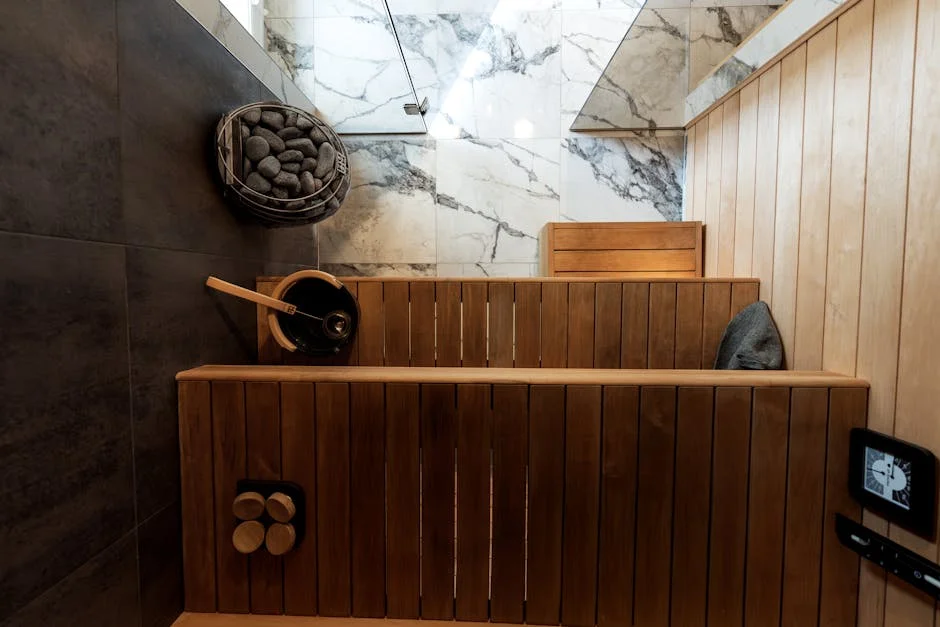
Matching Wood Product to Application Zone
Cedar sauna projects divide cleanly into three zones: interior skin-contact surfaces (benches, backrests, headrests), interior non-contact surfaces (walls, ceiling, floor trim), and exterior cladding. Each zone has different requirements, and the wrong product in the wrong zone creates problems. Bench and backrest surfaces need the smoothest, cleanest-grade cedar available , tight grain, minimal knots, sanded finish, and either no treatment or a sauna-specific penetrating oil. Wall and ceiling boards tolerate knotty grades and aromatic species where the budget demands it.
Exterior surfaces need UV and moisture protection that interior surfaces don’t require. The sauna wood and materials category spans all three zones , knowing which zone you’re addressing before purchasing prevents the common mistake of applying an exterior coating to interior wood.
Pre-built Units vs. Raw Materials
The decision between sourcing raw cedar boards and buying a pre-built cedar sauna unit is primarily a question of build scope and installation capability. Raw boards allow full customization of dimension, layout, and finish , and for custom sauna builds or renovation of an existing enclosure, they are the correct starting point. The trade-off is less flexibility in configuration.
For buyers without sauna construction experience, a pre-built unit eliminates a significant number of decisions and error points. For experienced builders or those working with a custom installer, raw cedar boards matched to the specific application zone offer better long-term results.
Interior Wood Treatment , When to Apply Oil, When to Leave It Bare
The default recommendation for interior cedar bench surfaces is no finish. Properly dried, clear-grade cedar maintains its appearance and hygiene with regular wiping. Applying oil to bench surfaces more than once , or using a film-forming finish , creates a tacky surface that attracts grime and is difficult to reverse. A single application of sauna-specific wood oil is appropriate for new cedar wall boards or for restoration of dried, greyed interior surfaces.
The exception is end grain. End grain on cut cedar boards absorbs moisture unevenly and benefits from one application of sauna wood oil at installation. This reduces the differential movement between face grain and end grain that causes checking over time.
Exterior Cedar Maintenance Scheduling
Outdoor sauna enclosures with red cedar exteriors require a regular maintenance schedule to prevent accelerated weathering. In most climates, a yearly inspection and touch-up application of exterior cedar oil or transparent stain is the practical minimum. Climates with high UV exposure or extreme precipitation , desert Southwest, Pacific Northwest , warrant closer to twice-yearly inspection and spot treatment.
The sign that maintenance is overdue is surface greying combined with raised grain. Cedar that has reached this stage can typically be restored with a light sand and fresh oil application, but restoration takes more product and more labor than maintenance applied before the surface degrades. Buyers choosing exterior cedar sauna products should factor maintenance cadence into the total cost of ownership.
Sizing and Coverage Planning
Cedar board coverage calculations require attention to the nominal vs. actual dimension gap. A tongue-and-groove sauna board listed at 1×4 nominal has an actual face width of approximately 3.25 inches after milling , a difference that adds up across a full interior surface. Underestimating coverage is the most common sourcing error in sauna builds.
The standard approach is to calculate the total square footage of each zone (walls, ceiling, benches separately), add 15% for waste and end cuts, and purchase to that figure. For finish products like sauna wood oil, the 1-gallon size covers a full sauna interior in most two-person enclosures at one coat.
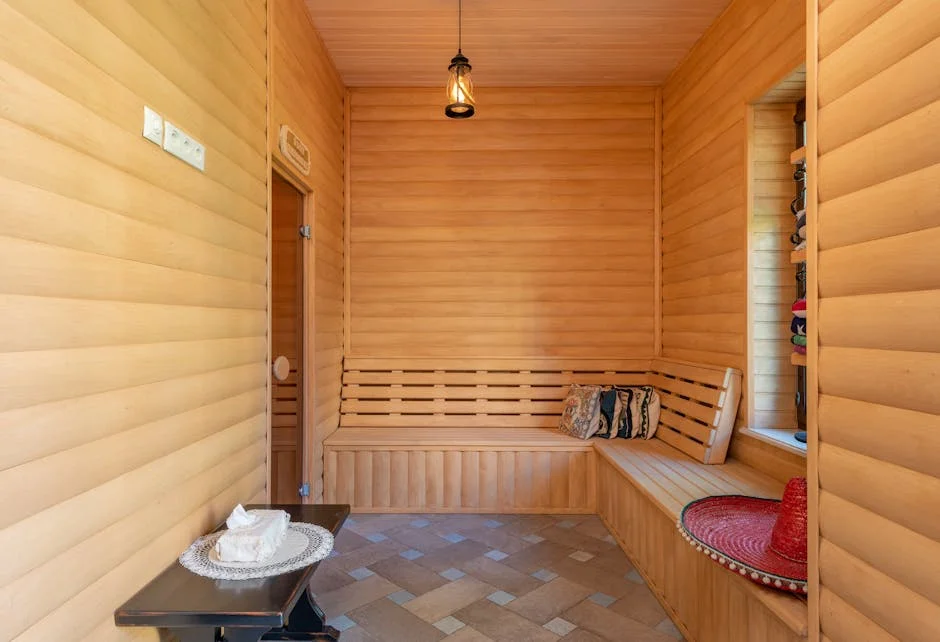
Frequently Asked Questions
What is the difference between aromatic cedar and western red cedar for sauna use?
Aromatic eastern red cedar has a stronger scent and higher essential oil content than western red cedar. That oil content can cause resin bleed on surfaces that reach high temperatures, making aromatic cedar better suited to sauna accent work, accessories, and lower-heat applications. Western red cedar is the standard recommendation for benches and wall cladding where heat levels are highest and skin contact is direct. For most sauna interiors, western red cedar is the more stable and practical choice.
Can I use a standard exterior wood stain on the inside of my cedar sauna?
Exterior stains are not appropriate for sauna interior surfaces. Most exterior stains are film-forming products that seal the wood surface , at sauna temperatures, that film can off-gas and create unpleasant odors. Sauna interior wood performs best left unfinished or treated with a purpose-formulated penetrating sauna wood oil like the All Natural Sauna Wood Oil, which conditions without sealing. Reserve exterior stain products like Wood Defender for the outside of the sauna enclosure only.
How often should I treat the cedar wood inside my sauna?
Interior cedar bench and wall surfaces generally need treatment once , at installation , if using sauna-specific oil, and only when the wood begins to look dry or gray after that. Over-oiling interior surfaces creates a tacky buildup. Exterior cedar surfaces require more regular attention: an annual inspection and touch-up application in most climates, more frequently in high-UV or high-precipitation environments. The maintenance schedule for exterior cedar is more demanding than for interior wood.
Is a pre-built cedar sauna unit or raw cedar boards the better choice for a first build?
For buyers without sauna construction experience, a pre-built unit eliminates the need to source and dimension raw materials, calculate coverage, and manage installation sequencing. The Outdoor Sauna 2 Person 1800W/110V Low EMF Infrared Sauna is a practical example of this approach, with a red cedar exterior already integrated into a complete electrical system. Raw boards make sense when custom dimensions or a specific wood grade is required. If this is a first build and installation support is limited, the pre-built route reduces risk considerably.
What causes cedar sauna boards to warp or gap after installation?
Warping and gapping in installed cedar sauna boards is almost always a moisture content problem. Boards installed at ambient moisture levels above 12, 15% will shrink as the sauna heat cycles drive moisture out, opening gaps at joints and backing out fasteners. The solution is to source kiln-dried cedar and acclimate it in the sauna space for 48, 72 hours before installation. Boards that are correctly dried and properly fastened , with adequate spacing for minor seasonal movement , remain stable through years of heat cycling.
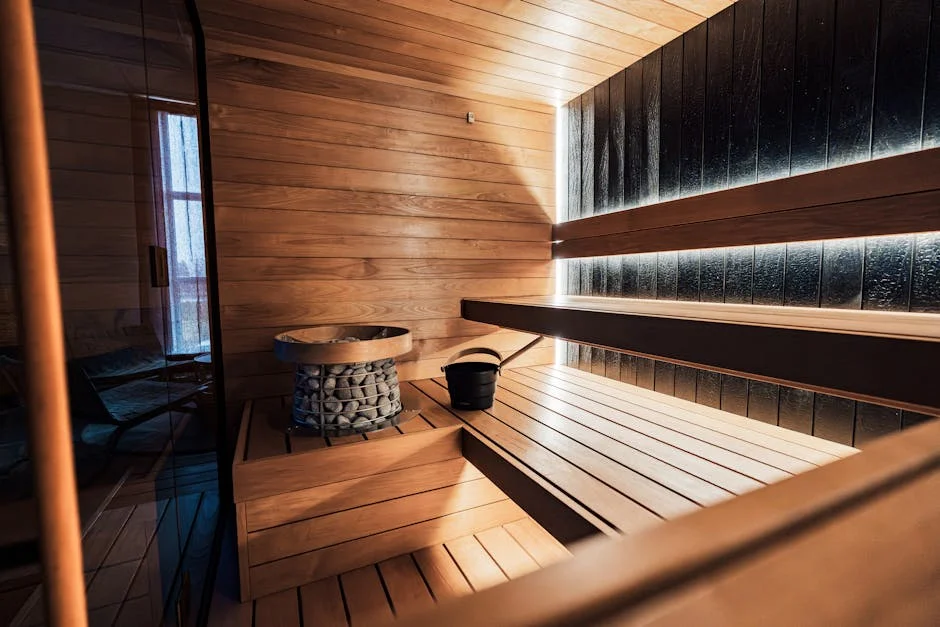
Where to Buy
Generic 16 Inch Long Aromatic Cedar Wood Boards. Rustic Wood for Crafts…See 16 Inch Long Aromatic Cedar Wood Boar… on Amazon